Highland Wildlife and Birdwatch Safaris, Guided wildlife excursions, Aviemore, Scotland
Highland Wildlife and Birdwatch Safaris, Guided wildlife excursions, Aviemore, Scotland Highland Wildlife and Birdwatch Safaris, Guided wildlife excursions, Aviemore, Scotland

Sunday, January 31, 2016

January 2016 was yet another strangely changeable month weather-wise in this area! With a succession of Atlantic storms bringing regular gales, heavy rain and floods and occasional snow, and the occasional brief high pressure system giving us a few cold, calm and sunny days, with temperatures fluctuating from a chilly minus 10c to a balmy plus 13c! However, by being flexible with itineraries, and cherry-picking the best days weather-wise, we managed some very enjoyable adventures out 'in the field', with the excellent off-road and winter weather abilities (and heated seats) of my Land Rover Discovery frequently proving to be a necessity! The days are noticeably lengthening now however, with over 9 hours of usable daylight, and dawn is still a relatively sociable 7:45 am.
Full-day bird lists averaged 25-35 species, whilst mammal species day-lists varied between 5 and 9 depending on the time we started and number of venues visited.

Panoramic shot of a local loch and the Cairngorm Mountains

To give you an idea of what you may realistically hope to see if you are planning a future January visit, I hope the following more detailed information will help....

Local/upland speciality bird species seen regularly on my safaris this month included:
Dipper, Crested Tit, Black Grouse (dawn only), Red Grouse, Snow Bunting and Golden Eagle, with just a few welcome sightings of Hen Harrier and Crossbills ...

Mammals seen regularly by my safari parties during the month included:
Rabbit, Red Squirrel, Roe Deer,  Red Deer, Reindeer, Mountain Goat, and Mountain Hare (now fully white) with just a couple of sightings of Brown Hare and Stoat and one solitary glimpse of a Weasel! Whilst a day-trip to the sunny Moray coast to escape poor weather on Speyside on the 23rd gave me good views of Seals...

Dipper
Our Dippers continued to entertain on local rivers, with their rarely-heard rippling warble of a song being projected proudly from a prominent rock soon after dawn as they proclaim their ownership of the territory and attempt to attract a mate.....we also saw them walk underwater and emerge a few seconds later with food.. seeing them immerse themselves like that at this coldest time of year still impresses me!! 

Crested Tit by safari client Sandra Morrish
Forest feeding stations perform two important roles when the weather turns really wintry - feeding the hungry and desperate forest birds, and giving us the chance to see them really close, and even hand-feed some of them! As well as the more common species, we are also lucky enough to regularly see Crested Tits too - these very localised and sought-after Caledonian forest specialities giving many of my safari clients a 'life-tick' , and putting a smile on many a face....

The same forest sites also gave us our few brief views of Crossbills, though once again, they proved frustratingly mobile.....

Cold weather also drives other scarcer species such as Reed Bunting    Brambling,  Yellowhammer, Bullfinch and Redpolls to visit feeding stations, and it is not uncommon for me to record all these species in and around this area in midwinter ......


Our local Blackcock continued to provide our dawn entertainment, with as many as 9 of these increasingly rare birds seen displaying in spectacular style at  traditional 'lek' sites on remote moorlands, often on snow - a splendid reward for an early start, and a great way to start the day! 

Red Grouse (female)
Our local Red Grouse seemed to react to the colder weather, their lack of camouflage on the snow, and the increased threat from predators on the heather moorlands by grouping up into 'mega-flocks' of up to 60 birds - so although we could go a while without seeing any as we crept slowly along remote tracks using my vehicle as a mobile 'hide', when we did find them , we often found lots!! Though on the milder days, the groups disbanded, and we saw the first real 'territorial' behaviour from the cock birds..

Though Snow Buntings can often be seen in coastal areas at this time of year, I think it is even nicer to see them against a snowy upland backdrop more befitting their name.... and we were fortunate to see them several times this month.. including one flock of over 30 birds on the 16th.... 

Golden Eagle is another rare, iconic, localised and much sought-after bird in the UK, and as I have mentioned before, the short days of the winter months give us our best chance of seeing them. January 2016 continued this trend, and we were lucky enough to enjoy a number of good sightings of these majestic birds hunting in upland glens... with the Ravens and Buzzards that often harassed them, looking really quite small alongside these 'kings of the skies' !

Whilst on the subject of Eagles, I am aware of a number of recent sightings of White-Tailed Eagle on my local patch, though rather frustratingly, I was not lucky enough to be in the right place at the right time to connect with them this month.....

Still on raptors... we had a couple of nice sightings of Hen Harrier (both ring-tailed females) hunting low over heather moorlands this month, along with numerous sightings of Common Buzzard, Kestrel and Red Kite, and just a few glimpses of Barn Owl, Goshawk, Peregrine and Sparrowhawk ....

Although I am not a massive fan myself... gull enthusiasts may be interested to know that we have had two northern specialities, namely Glaucous and Iceland Gulls showing well on flooded fields locally this month....

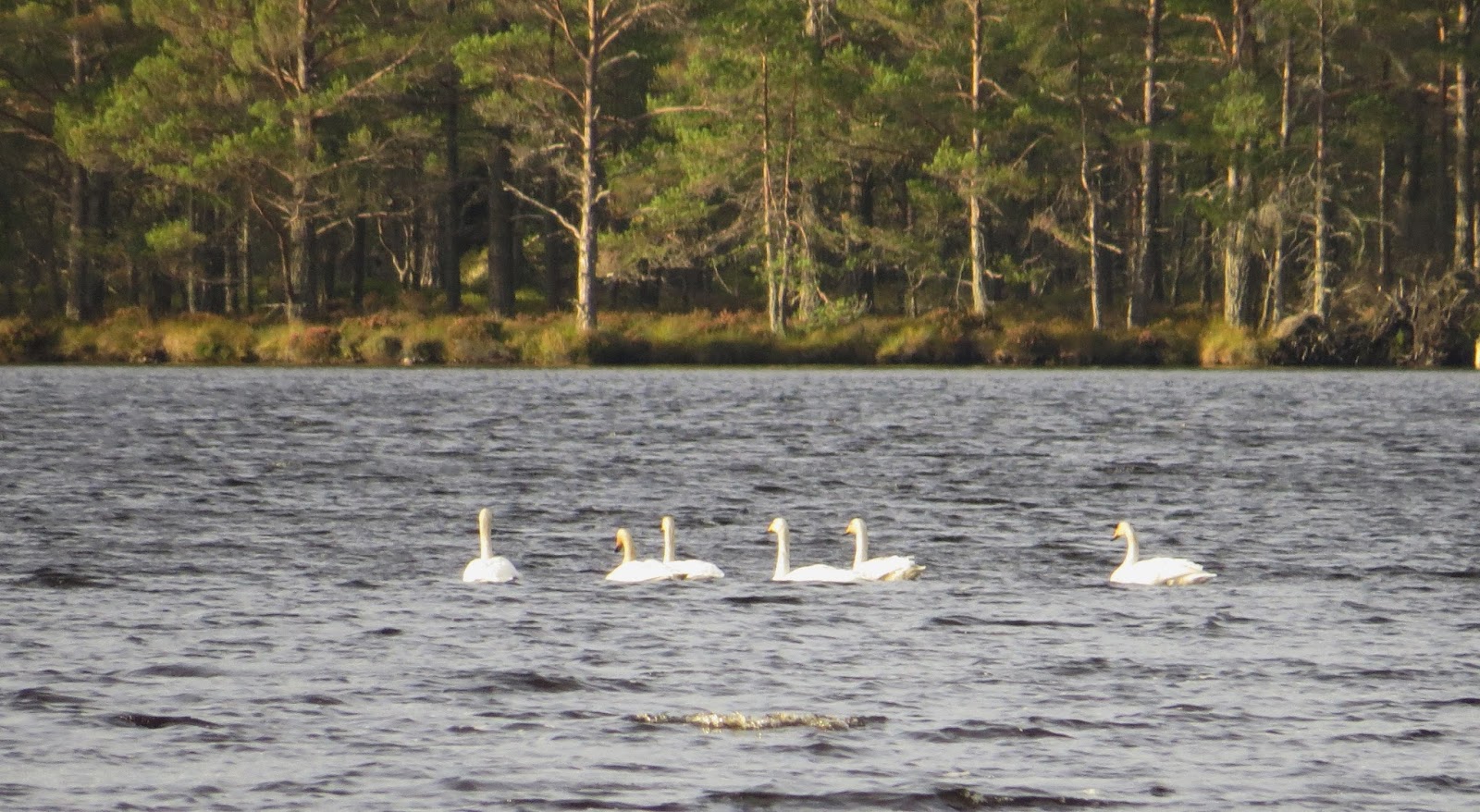
With many of our local lochs frozen over, these same flooded riverside fields also gave us good views of family groups of winter visiting Whooper Swans and large flocks of Greylag Geese....

Male and female Eider
As I mentioned briefly in my mammal summary earlier, a day-trip exploring the quaint fishing villages along the nearby Moray coast on the 23rd also gave me my first views this year of coastal/seabirds such as Turnstone, Redshank, Long-Tailed Duck, and one of my favourites, The Eider....though a hoped-for sighting of a Little Auk escaped me......

Colourful fishing boats in Burghead harbour


Onto mammals now.....


Mountain Hare sheltering in it's 'form'
Mountain Hares, being absent from most of the UK are always popular with my safari clients, and we did particularly well with them this month, with some super close-up views and photo opportunities ... though it should be noted that you do sometimes have to trek a little way up steep mountainsides in wintry conditions to achieve this.....

Red Deer stag
It can be the same story with Red Deer, who are most frequently seen on the high ridges of upland glens...though when the weather turns really wild, they can sometimes be found sheltering in the forests at the foot of the hills...

The same upland sites also gave us regular good sightings of feral Mountain Goats .. with many of the females looking to be heavily pregnant.... expect some aaaahh! pics of their cute youngsters soon...

Red Squirrel
In the forests, especially in winter, our Red Squirrels can usually be relied upon to take advantage of well stocked feeding stations, especially soon after dawn, often competing with the 'Cresties' for our attention and camera viewfinders!!

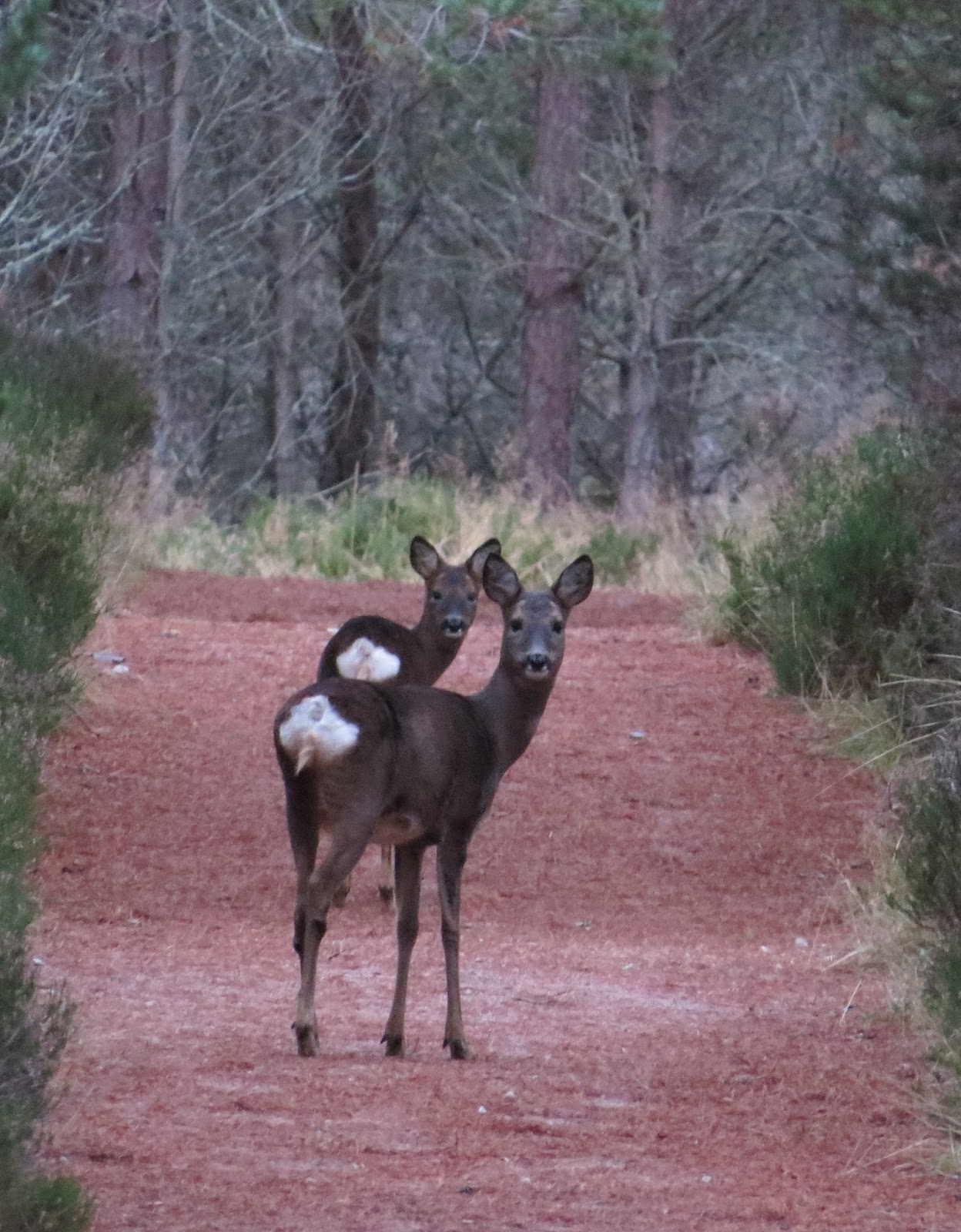
Roe Deer are seen frequently soon after first light on my safaris, but are generally very elusive during the remaining daylight hours....I guess their timid nature means that they feel safer under the cover of darkness....

Our local Reindeer however, are far from timid, and although they are free to roam far and wide, they can often be seen on and around the lower slopes of Cairngorm Mountain...occasionally even being found licking the salt from the heavily treated  'ski road'.....

Seals on the Moray coast
Seals do not often feature on my sightings blog, but the aforementioned Moray coast adventure on the 23rd gave me great close-up views of them, that is until an inconsiderate dog-walker let her dog scare them off of their haul-out spot..... grrrrrrr!!!

So, despite the very changeable and occasionally extreme winter weather conditions this month, we seem to have got 2016 off to a good start, with some enjoyable and exhilarating days out and plenty of memorable wildlife sightings, and all in some amazing 'winter wonderland' scenery.......so as the recent Land Rover TV advert suggests... hibernate? ...no... hibernot!!

Another snowy mountain adventure.....


Tuesday, January 05, 2016

Merry Christmas!! I would like to wish a happy and wildlife-filled new year to all my readers!
And a big "thank you" to everyone who used my safari guiding services during 2015......

December 2015 was a very strange month weather-wise in the Cairngorms national Park, with us experiencing heavy snow and sub-zero temperatures, our worst rain and floods on record, gale force winds, and our warmest December days since records began!!!
Despite the very 'changeable' and challenging conditions, and the days being at their shortest now, with only around 8 hours of daylight, we still enjoyed some memorable days out with plenty of good wildlife sightings against often dramatic Highland backdrops.
Bird species day-lists averaged mid 30's, and mammal day-lists ranged between 4 and 8 species, depending on the start time, length of safari and number of venues visited.
I was away down in England visiting relatives and friends for the final third of the month, so my report is a little shorter than usual....

A favourite local upland glen

Wildlife highlights included:

Local/upland speciality bird species seen regularly during the month included:  Crested Tit, Black Grouse, Red Grouse, Dipper and Golden Eagle,..though Crossbills yet again proved frustratingly elusive, with our brief views being limited to the 'fly-over' variety....Whilst a couple of mountain-top adventures gave us sightings of Ptarmigan and Snow Bunting....

Mammals seen regularly during the month included:
Red Squirrel, Red Deer,  Roe Deer, Reindeer, Rabbit, Brown Hare, and Mountain Hare (most now fully white) with just a few sightings of Mountain Goat.

Crested Tit by safari client Paul Renshaw

Our local Crested Tits continued to show well at my favourite forest feeding stations, especially soon after dawn, when they are presumably at their hungriest. There are probably only around 1,200 - 1,500 of these charismatic little birds in the whole of the UK, and they are all to be found in the Caledonian forests of Highland Scotland, so you can imagine that many of my safari clients are delighted to see them for the first time.

Displaying Black Grouse too proved very popular with my safari clients again this month, with our dawn visits to their traditional moorland 'lek' sites allowing us to enjoy the spectacular 'show' of up to 13 of these increasingly rare birds strutting their stuff, though the poor weather and light conditions meant that a decent photo eluded us...


Red Grouse by safari client Paul Renshaw
In stark contrast, Red Grouse were actually surprisingly easy to see and photograph on their favoured upland heather moorlands this month, as many of the cock birds seem to be getting all territorial, with some seen perching on the few higher points and heard uttering their guttural 'go-back, go back' calls...


Dipper
Similarly, our local Dippers too are definitely already planning for the spring breeding season, with much singing and displaying being witnessed , especially near to favoured nesting spots such as bridges....which is good , as it gives us much more chance to see and photograph them....


Overhead shot of Golden Eagle by safari client Paul Renshaw

As I mentioned last month...the short daylight hours mean that mid-winter is definitely the best time of year for raptor sightings in this area, and this month again proved very fruitful, with my favourite local upland glens providing my safari clients and I with regular sightings, and even the occasional (and rare)  photo opportunity, of the much sought after Golden Eagle, with views of these magnificent and iconic birds providing great entertainment,  numerous 'life-ticks'  and putting big smiles on many faces....The regular 'raptor back-up cast' of Kestrel, Sparrowhawk, Peregrine, Buzzard , Red Kite, and even the occasional Hen Harrier and Goshawk, should not be forgotten though, as all were seen at least once.....


Male Bullfinch

Although not really a 'local speciality' bird, it is always nice to get good views of a Bullfinch, and we were lucky enough to get several good sightings of these beautifully coloured, and increasingly rare birds at forest feeding stations.. where another very welcome by-product of regular feeding is the incredibly confiding behaviour of the hungry Coal Tits and Great Tits, who in the colder months are often happy to feed from our hands! 

Coal Tits and Great Tits feeding from the hand


Flock of Greylag Geese with 'mystery' white Goose 

Winter visiting birds continued to show well, with Whooper Swans, 'grey' Geese, Teal, Wigeon, Redwings and Fieldfares all being seen, and just a few reports of Waxwings, though we did not get lucky with them.....


Ptarmigan by safari client Steph Cottell


The changeable weather meant that suitable and safe opportunities for 'mountain adventures' in search of the mountain top species - Ptarmigan and Snow Bunting - were very limited! However, by using my Cairngorm Mountain Birdwatching Guide licence to allow access from the normally 'closed system', and braving windchill temperatures down to -18c,  we did manage a couple of walks that provided views of both species..though it is fair to say we definitely earned them!!


Raven by safari client Paul Renshaw


Although Ravens are seen frequently in this area, and I probably take them for granted a little bit, I am aware that they are much rarer over most of the UK, and I thought this excellent photo showed their 'diamond' shaped tail - a major i.d. tip, very well....


Onto mammals now....

Mountain Hare in winter coat
Mountain Hares, generally being creatures of remote uplands, are not easily seen by most UK wildlife watchers on their local patches, so always prove popular on my safaris. They are now in their finest white winter coats , and visits to my favourite sites provided us with some decent views and a few photo opportunities...


Red Deer stags
The same could probably be said of Red Deer, and it is very unusual for us not to see at least one herd of these impressive animals, when visiting suitable habitat...


Red Squirrel by safari client Steph Cottell

Likewise, Red Squirrels are generally confined to Highland Scotland, and their liking for peanuts at forest feeding stations always gives us a decent chance of seeing them....


So despite the weather, December 2015 once again turned out to be another splendid month for wildlife watching in this area. I hope you have enjoyed reading this, and my other sightings blogs throughout the year as much as I have enjoyed experiencing them......And I am already looking forward to even more wildlife-filled adventures in 2016.........


Sundown at a local loch by Steph Cottell

Monday, November 30, 2015

November 2015 started unusually mildly in this area, but the middle of the month saw gales and rain, and then winter truly arrived with our first proper snowfall and frosts. Despite the sometimes challenging conditions, by 'cherry-picking' the best days, and designing itineraries round the weather, we still managed some very enjoyable days out, with some excellent wildlife sightings, often amid dramatic winter landscapes.
The days are shortening noticeably now, with only around 8-9 hours of usable daylight, but despite this, we still frequently managed full-day bird day-lists into the low 40's and mammal day-lists of up to 8 species....

Loch Morlich and the Cairngorms

Wildlife highlights included:

Local/upland speciality bird species seen regularly during the month included: Dipper, Crested Tit, Black Grouse, Red Grouse and Golden Eagle,..though Crossbills again proved frustratingly elusive, with our few sightings being limited to the 'fly-over' variety.....

Mammals seen regularly during the month included:
Red Deer,  Roe Deer, Reindeer, Red Squirrel,  Rabbit, Brown Hare, and Mountain Hare, with just a few sightings of Mountain Goat, and one brief glimpse of a Stoat.


Dipper

Our local Dippers are definitely becoming more aggressive now, with much displaying, dawn singing and chasing each other around being witnessed as they presumably seek to establish winter and breeding territories.....

Crested Tit by safari client Russell Harvey

Crested Tits, being a true 'local speciality', were seen pleasingly regularly, especially on the colder days, at my local forest feeding stations, though it should be noted that , being so 'flitty' and quick and never staying very long, getting good photos of them can be quite tricky! Unlike the Great Tits, Robins, Chaffinches and Coal Tits, the latter of which frequently feed from the hand!

Black Grouse are always popular with my safari clients, probably because of their relative rarity and sadly, declining numbers over much of the UK, and our dawn visits to their traditional local moorland 'lek' sites were very successful, with an average of 6 cock birds seen showing and displaying well, with cold, still, frosty mornings generally proving more successful than wet and windy ones, though a decent photo eluded us this month....

Red Grouse by safari client Ron Mitchell
Similarly, our local Red Grouse, now with their white winter leg feathers, seem to be showing more regularly, with our local heather moorlands echoing with the cock birds cackling , guttural "go back go back"  calls as they start to become a little territorial, and some super close-up sightings and photos being achieved as we drive slowly through, using my safari vehicle as a mobile hide...

Golden Eagle
As I have mentioned in previous years, and at the risk of repeating myself... November is in my opinion, THE month for raptor sightings in this area, and so it proved again this year, with my favourite local upland glens providing my safari clients and I with regular sightings, and even the odd (very rare)  photo opportunity, of the much coveted Golden Eagle and White -Tailed Eagle, with these awesome and majestic 'Kings of the skies' providing great entertainment,  numerous 'life-ticks'  and putting big smiles on many faces....
The regular 'raptor back-up cast' of Kestrel, Sparrowhawk, Peregrine, Buzzard , Red Kite, and even the occasional Hen Harrier and Goshawk, should not be forgotten though....

Whooper Swan family
Although not exclusively winter birds of this particular area, northern Scotland is often the first UK landfall for the Whooper Swans and 'Grey' Geese arriving from their Arctic breeding grounds, and this month saw a further influx of large flocks of birds travelling south to enjoy our (in relative terms!) milder winter weather.

Fieldfare
The same could also be said of the 'winter' Thrushes - with lots more Redwings arriving throughout the month, their 'seep seep' calls often being heard overhead, along with the 'chak chak chak' of the Fieldfares,  and they continued to pillage our rapidly dwindling local berry supplies, much to the continued annoyance of our resident Blackbirds and Thrushes!

Other less common birds seen this month included several good sightings of Bullfinches and Yellowhammers, and a few decent early morning views of another normally elusive bird, the Woodcock - With most birders' views of this rare 'wader' (that doesn't wade!) usually being restricted to brief silhouetted glimpses of them 'roding' over the treetops at dusk, the chance to see a fairly static bird, and enjoy their intricate, cryptic plumage is always a welcome experience....

Onto mammals now....


Red Deer stags
Although the autumn 'rut' is now over and seemingly forgotten by the participants!, it was still a treat to see the magnificent fully antlered Red Deer stags now back in their same-sex herds in their favoured upland glens, with my safari clients often surprised at their impressive size and powerful build....


Roe Deer
Although not as physically impressive as their Red cousins, Roe Deer are probably more often described as cute, but always prove popular with my safari clients, and we were fortunate enough to see them on numerous occasions this month, especially soon after dawn....


Red Squirrel

But, when it comes to cuteness..... our local Red Squirrels take a bit of beating, as they again put a smile on many of my safari clients faces, especially those seeing these attractive and characterful creatures for the first time...

Atlantic Salmon 
November is usually the best month of the year to see our Atlantic Salmon spawning. These remarkable and often very large fish spawn in the shallow waters in the upper reaches of our rivers, at the very spot where they themselves were hatched several years before, having originally spent 2-3 years in the river, then another 2-3 years feeding and maturing out in the mid Atlantic, before undertaking a perilous journey many miles upriver, often involving avoiding poachers and predators and negotiating high falls and rapids on the way - an amazing migration story! However, sightings are very reliant on the rivers water levels - too little water and the Salmon cannot access the upper reaches - too much water, and they can get there... but we can't see them, and after a few sightings early in the month, sadly that was the case for the remainder of the month....

So, although many people I know seem to get the 'winter -blues' as the days shorten and the temperatures drop , as a keen wildlife watcher, it is far from the case for me up here, with November now one of my favourite and, weather permitting, most productive safari months, with lots of great wildlife to be enjoyed, and often in spectacular snowy scenery.....

A snowy adventure in the spectacular scenery of the Cairngorm Mountains


Saturday, October 31, 2015

October 2015 was a very good month for wildlife-watching in this area weather-wise.With high pressure dominating for most of the month, we enjoyed lots of calm and sunny, if occasionally a bit cold weather, with very little wind or rain until the end of the month.
Though the days are certainly shortening now, we still had around 10 hours of usable daylight, and the Highland scenery is still ablaze with glorious autumn colours, and the first dusting of snow on the Cairngorms provided many of my safari clients and myself with some very picturesque landscape photo opportunities.
An influx of winter visitors from colder areas further north, helped full-day safari bird lists increase up into the 40's, whilst mammal day-lists varied between 4 and 9 depending on the start time and number of venues visited.

Autumn colours in a beautiful upland glen

Wildlife highlights included:

Local speciality bird species seen regularly during the month included:
Black Grouse, Red Grouse, Dipper, Crested Tit, Golden Eagle, Whooper Swan and 'Grey Geese', with a few glimpses of Crossbill.....

Mammals seen regularly during the month included:
Red Deer (rutting), Roe Deer, Reindeer, Rabbit, Brown Hare, and Mountain Goat, with just a few sightings of Mountain Hare, and one glimpse of a Stoat.

Black Grouse at dawn on a Highland moor

The cock Black Grouse on our traditional moorland 'lek' sites, having been missing since mid June, began to assemble and occasionally even display at dawn, especially on the colder mornings, with my safari clients enjoying seeing an impressive 12 birds on the 23rd, though 2-6 birds is more usual at this time of year..
Red Grouse

Our local Red Grouse appeared to still be in their family groups, and with the shooting season virtually over, they now seem a little less wary and can be less difficult to see, especially when using my safari vehicle as a mobile hide on the tracks through their heather moorland home.

Dipper
Dippers, being birds of fast-flowing, clear-running upland rivers, are largely absent from much of the UK, which means they are always popular with my safari clients, most of whom do not have them on their local patch. Luckily, they are relatively common on our local rivers up here, and we managed some good sightings at some of my favourite local sites, with one or two birds even singing and seemingly displaying some 'territorial' behaviour.

Crested Tit

Crested Tit is a true local speciality, with Speyside being their UK stronghold, but with them generally being part of roving mixed species flocks in winter, they can be surprisingly difficult to see.
However, a post-dawn visit to a forest feeding station increases your chances, and we were lucky enough to get some good views on a number of occasions, especially on colder days. A bonus by-product of regular winter feeding is sometimes being able to feed the incredibly confiding Coal Tits by hand, an experience much enjoyed by my safari clients...

Golden Eagle
Golden Eagle too is truly an iconic bird of the Scottish Highlands, and our regular visits to suitable upland glens paid off on several occasions, with a number of decent sightings, and a couple of amazing views of these majestic (and huge!) raptors being obtained, including the very rare opportunity to view a perched bird through the telescope! In fact, experience suggests that the shorter days of the winter months actually seem to give us more chance of seeing them, as they have less available hours of hunting time....

The same applies to the other birds of prey, with Kestrel, Sparrowhawk, Peregrine, Red Kite, Common Buzzard and even Goshawk and Hen harrier all being seen on my safaris this month.
Whooper Swans

Although not exclusively winter birds of this particular area, northern Scotland is often the first UK landfall for the Whooper Swans and 'Grey' Geese arriving from their Arctic breeding grounds, and the middle of the month saw us get our first proper influx, as they fly south to enjoy our (in relative terms!) milder winter weather.

The same could also be said of the 'winter' Thrushes - first the Redwings arrived, their 'seep seep' calls being heard overhead, shortly followed by the 'chak chak chak' of the  Fieldfares,  and they soon set about pillaging our local berry supplies, much to the annoyance of our resident Blackbirds and Thrushes!

Male Crossbill

Crossbills again proved a little frustrating, with our views generally being limited to fleeting glimpses of fly-over birds, their 'jip jip' calls alerting us to their presence. However, on the 30th, we got lucky, when a male bird perched and called from the top of a conifer, giving us great views and a rare photo opportunity.


Onto mammals now....

Red Deer stag

'Mammal of the month' for October has to be the Red Deer,  with their spectacular annual 'rut' providing my safari clients with some terrific entertainment - the fully antlered stags 'roars' echoing through the glens, as they spend much of the month  posturing , fighting off rivals and mating with as many of their 'harem' as possible - surely one of British nature's 'must-see' experiences?

Red Squirrel

...With second place going to that ever popular peanut-munching forest dweller, the cute and charismatic Red Squirrel, who can usually be relied upon to appear for an easy feast at my favourite forest feeding stations.....

Mountain Hare and Mountain Goat were both seen in a favourite upland glen on a number of occasions, though I failed to get any decent photos this month...

Spawning Atlantic Salmon
Salmon continued to make there way up our local rivers towards their spawning grounds, though the lack of water hampered their progress, until some heavy rains at the end of the month raised the levels enough to allow them access to the upper reaches, where we were then lucky enough to be able to see them 'leaping' up falls, and also actually watch them spawning in the shallows..


So, to summarise, helped by the decent weather, and the miracle of migration, October 2015 turned out to be yet another marvellous month for wildlife watching in the Cairngorms National Park, with plenty of good sightings, many memorable experiences and the odd surprise, all set against a beautiful autumnal Highland backdrop.......

Autumn at Strathconon

Wednesday, September 30, 2015

September 2015 was actually (at last!!) not a bad month weather-wise in this area, being drier and sunnier than most of the months preceding it, and the winds were generally light.
The days are shortening noticeably now though, with only around 12 hours of usable daylight , but by way of compensation, the heather is still a lovely purple, many trees are full of colourful berries, and the leaves and ferns are starting to change into their attractive autumnal hues.....
I was away in southern England visiting relatives and friends for a good part of the month, so my report will be shorter than usual, and will contain some general observations and pictures from previous Septembers.....
With all the summer visiting bird species gone by mid-month, and the winter visiting bird species not yet arrived, bird day-lists dropped down to their lowest levels of the year (in the 30's), whilst mammal day list varied between 5 and 9 species, depending on the time of our start and the number of different habitats visited.

Early autumn on a local moorland

Wildlife highlights included:

Local speciality bird species seen regularly during the month included: Osprey (first week only), Dipper, Red Grouse, Crested Tit and Goldeneye, with a solitary view of a Goshawk, and one memorable sighting of a Golden Eagle....

Mammal species seen regularly included: Red Squirrel, Red Deer, Reindeer, Roe Deer, Mountain Goat and Rabbit......


Osprey
A few of our local Ospreys lingered around their now redundant nest sites for a few days early in the month, giving us our last chance to admire these impressive raptors and their fishing skills, until they return in the spring.......

Red Grouse
The Red Grouse on the upland moors, many still in large family groups, continued to entertain my safari clients, though they still seem a little wary of humans...but by using my vehicle as a mobile hide, we were often able to get some decent photographic opportunities...

Goshawk
The same moorland site also gave us good views of a Goshawk on the 4th. This impressive, and usually very elusive bird of prey was seen flying around, chasing Red Grouse, and perching on shooting butt marker posts, giving me a rare chance of a photograph.....

Crested Tit
Crested Tit is always high on my safari clients 'wish-lists', and although they are now mainly to be found in mixed flocks roaming around the Caledonian pine forests, we also managed to get some decent views of them at my feeding stations, especially soon after first light ...

Dipper
The Dippers on our local rivers began to be seen a little more regularly, and appeared to be getting a little territorial, with some singing heard, and aggressive behaviour being witnessed near to prime nest sites, especially at first light...

Common Buzzard

Golden Eagles are probably more commonly seen on my safaris during the short days of winter, when they have less hours of daylight in which to hunt, but a safari on the 4th saw us enjoy fairly close views of a sub-adult bird  'herding' a group of Red Deer hinds towards a precipitous cliff edge in a local upland glen, presumably in the hope that one or more would fall to their death, and provide it with venison for the next week or more! An amazing spectacle, and a life first for my safari clients!! Raptors in general seemed to be pretty active throughout the month with us seeing Peregrine, Red Kite, Common Buzzard, and Kestrel regularly as well...


Onto mammals now....

Red Squirrel

As I mentioned last month, with the summer visiting local speciality birds departing this area, mammals become more of a focus on my safaris, and we were fortunate to see a good variety again this month. The  'mammal of the day' award was invariably won by the Red Squirrel - with many of my safari clients seeing these these very characterful and attractive 'Highland speciality' animals for the first time..

Red Deer
The end of September usually sees the start of the Red Deer rut, with the stags beginning to 'check-out' the hinds, sharpen up the tips of their antlers on rocks and trees, and partake in a little gentle 'sparring' with likely rivals, all accompanied by a tremendous 'roaring', which echoes round the glens... a marvelously atmospheric spectacle....

Still up in the glens, our Mountain Hares, though still in their browny-grey summer coats are gradually turning whiter, from their feet upwards, as autumn progresses, in preparation for the snow to come....

So despite my absence for much of it, September 2015 actually turned out to be a pretty good month for wildlife watching in this area with some very memorable and enjoyable experiences, all in spectacular scenery, and with the winter visiting birds due to arrive, and the Red Deer rut looming, I am already looking forward to October....

River Spey looking very atmospheric....