January 2021 saw winter really hit the Highlands, with the heaviest persistent snowfall and coldest temperatures we have experienced for some years turning the Cairngorms National park into a spectacularly scenic 'winter wonderland'.
Sadly, the virtual lockdown and travel restrictions across the UK meant that it was yet another month without a single safari party able to join me for some wildlife adventures...so in order to keep my finger on the pulse of the wildlife activity, in readiness for when normality returns, I just turned my local daily exercise walk into a safari a few times a week, always armed with my optics and camera of course....and although certain sites were 'out of bounds' , causing a few omissions in my usual species portfolio, I still managed to see a decent selection of wildlife under the difficult circumstances..
The days are lengthening noticeably now, with up to 9 hours of usable daylight, and dawn (for the Black Grouse) is still a relatively sociable 8am, with dusk at around 5pm.
Full-day local safari bird lists usually top-out in the 30's or 40's, though a trip to the nearby (one hour by car ) Moray Coast (when allowed) can boost this total considerably, whilst mammal day lists can vary between 3 and 8 species, depending on the time of our start and number of habitats visited, with early starts usually proving to be best.
 |
| Ruthven Barracks and the Monadhliath Mountains |
To give you an idea of what you may realistically hope to see if you are considering a future January visit, I hope the following more detailed information, illustrated with photos taken at sites in and around the Cairngorms National Park by myself, my friends or my safari clients this month and in previous January's will help....clicking on the picture enlarges it to full-screen.
High quality prints of all photographs taken by myself and featured on this website , or that I have sent to you attached to emails , or previously posted on our Facebook page can be purchased at very reasonable prices... see the 'Buying my photos' section at the end of this blog for more details...
Local speciality/upland bird species seen regularly during the month included:
Black Grouse (usually first hour of light only), Red Grouse, Crested Tit, Dipper, and Golden Eagle... I also managed a few brief glimpses of Crossbills. Despite many hours of snowy dawn walks in search of Capercaillie, (I'm trying hard!) I only managed one very brief glimpse of a female flying from a trackside tree into the depths of the forest....
A good variety of seabirds, waders, wildfowl and Geese can be enjoyed at the Moray Coast and the nearby inland lochs...
Mammal species seen regularly included:
Red Deer, Roe Deer, Red Squirrel, Rabbit, Mountain Hare (white), and Mountain Goat, with just a few sightings of Brown Hare, and , rather incredibly, my first mammal sighting of the year was a Scottish Wildcat/Feral Wildcat seen hunting small mammals on the edge of a moorland just before dawn on January 1st - a very rare occurrence, and an unbelievable stroke of luck for me!
Common Seal and Grey Seal were both seen at the nearby Moray Coast...
 |
| A snowy local upland moorland |
January 2021 bird sightings in more detail:
In the forests...
In the Caledonian pine forests, our local Crested Tits continued to show well at my favourite forest feeding stations, especially soon after dawn, and particularly on the colder days, when they are presumably at their most desperate for food, with sometimes up to 3 of these true 'local specialities' showing at once... and, having plenty of time on my hands, I even managed a few reasonable photos.
 |
| Crested Tit by Bob Smith (photo from Jan 2020) |
 |
| Crested Tit |
It is well worth noting that the winter months (October-February), when natural food is at a premium, are actually the best time of year for seeing the 'wee Cresties', as these characterful little birds can be frustratingly secretive and unobtrusive during the breeding season, with sightings being much more difficult to obtain between March and September....
 |
| Feeding a friendly Robin |
 |
| Hand-feeding a hungry Coal Tit (photo from Jan 2020) |
A bonus by-product of regular winter feeding is often (especially on colder days) being able to feed the incredibly confiding Coal Tits and (sometimes) Great Tits and Robin by hand, an experience much enjoyed by my safari clients of all ages...
 |
| Male Crossbill |
Still in the Caledonian forests, rather unusually, I actually did pretty well for Crossbill sightings this month, with some very decent sightings, and even a rare photo opportunity! Mainly because this is breeding season for them, which means that this is your best chance to see them perched in treetops, often singing to establish a territory and attract a mate....but you still need a lot of patience, and a bit of luck....
 |
| Capercaillie poo.. clearly showing their winter diet of pine needles |
Continuing the forest theme, and with the UK lockdown meaning no safaris, I used the spare time wisely, starting my annual quest for my very tricky Capercaillie 'year-tick', and, after a good number of unsuccessful dawn walks where I often found Caper poo, but no actual birds, I finally managed my first sighting of one this year - a brief glimpse of a flying female on the 19th of the month.
Please note though, that Capercaillie numbers would still appear to be declining alarmingly, they are definitely becoming very rare and elusive, and I would only rate our chances of seeing one on my safaris as "very slim" at best...
Up on the moors....
 |
| Displaying Black Grouse |
 |
| Black Grouse in aggressive mode |
Black Grouse are one of my favourite local speciality birds, and always prove popular with my safari clients, especially from January to May when they usually display and lek. However, my dawn (8am) visits to their traditional 'lek' sites gave 'patchy' results this month, with a few 'no shows' offset by up to 9 cock birds showing beautifully on one occasion...please be aware though, that they are easily 'spooked' , so we have to be very quiet and keep a respectable (and legal) distance away...
 |
| Female Red Grouse |
 |
| Male Red Grouse |
Still on the moors, the Red Grouse are becoming a little easier to see each week now, as the cock birds become ever bolder, often posturing aggressively and calling loudly to establish a territory and attract a mate, often with their red 'eyebrows' bulging impressively.
On the rivers....
 |
| Dipper by Bob Smith (photo from Jan 2020) |
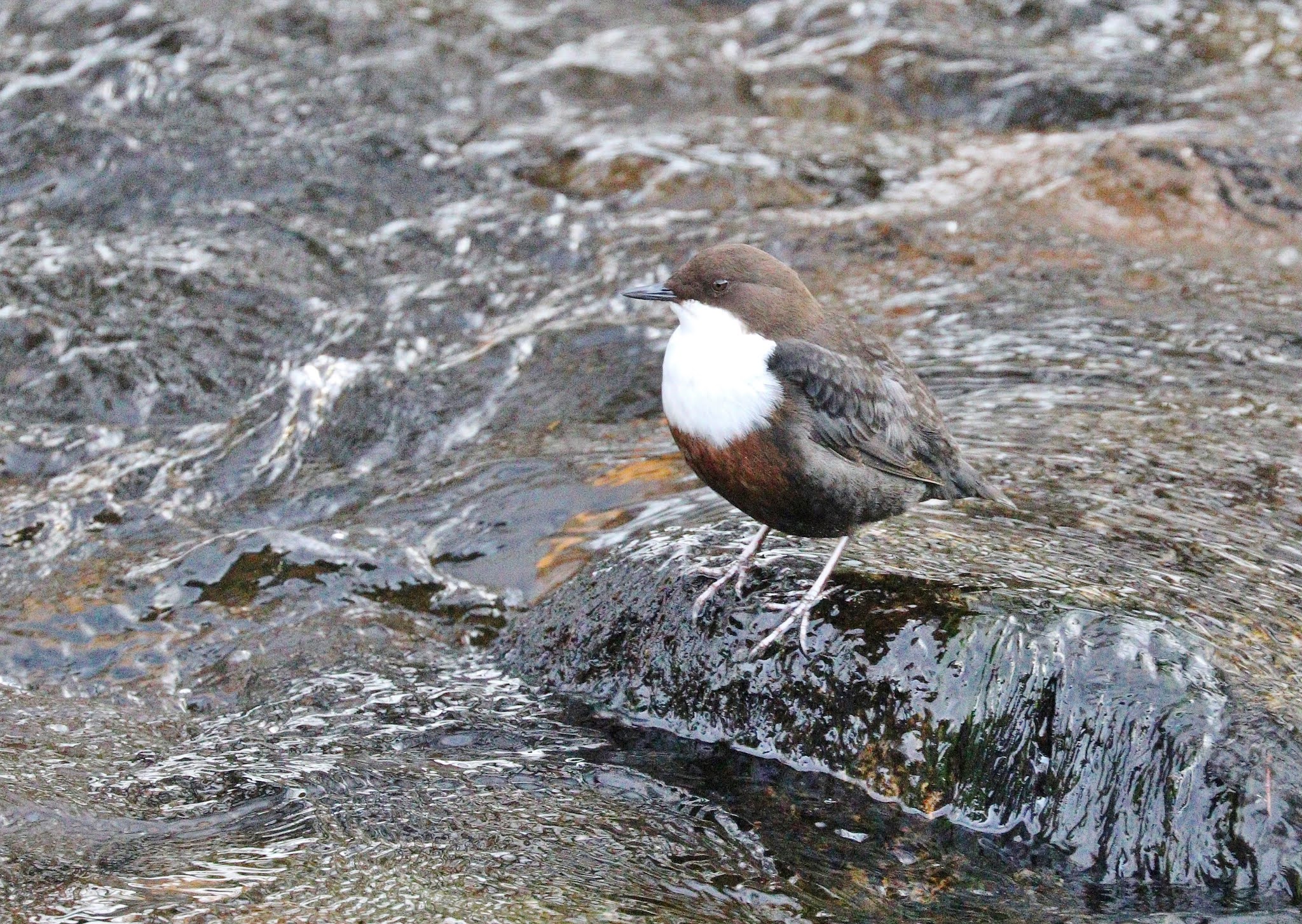
On our local rivers, the Dippers too are usually in territorial mode by now, and we are normally able to see them posturing and displaying and often singing their distinctive 'scratchy' song from a prominent rock, often near a bridge...but I will admit to struggling a bit for sightings this month, as the rivers were often very high....
Up in the glens....
 |
| Soaring Golden Eagle by Steve Nicklin (photo from Jan 2018) |
Sadly, visits to my favourite upland glens were limited by a combination of poor weather conditions, heavy snowfall and travel restrictions this month, but for future reference, I can advise that ,as I have mentioned before, the short daylight hours, and no breeding season distractions, mean that winter is definitely the best time of year for raptor sightings in this area, and in a more normal January we could reasonably hope to manage a few sightings of Golden Eagle, and possibly White-Tailed Eagle.......
 |
| Peregrine Falcon (photo from Jan 2020) |
 |
| Red Kite |
 |
| Common Buzzard (photo from Jan 2020) |
Should the Eagles fail to show, the regular 'raptor back-up cast' of Kestrel, Sparrowhawk, Peregrine, Buzzard , Red Kite, and the chance of even the occasional Merlin, Hen Harrier and Goshawk often provide good entertainment by way of consolation though....
Up in the mountains....
 |
| Snow Buntings (photo from Jan 2020) |
Sadly, with COVID restrictions meaning that the Cairngorm Mountain approach road was closed to prevent large numbers of snow sports enthusiasts visiting, I too was unable to access the mountains this month.
However, for future reference, Snow Buntings can often be seen well there during the winter as they usually begin to frequent known lower altitude sites, possibly driven down from the mountain tops by the snow and cold, and with their numbers likely to have been swelled by visitors from Scandinavia...and I am always sure to have a bag of wild bird seed on board, as they can sometimes be tempted to come and feed at quite close range....so I have shown some photos from previous January's...
It was a similar story with the other 'mountain species, but I can advise that a few Ptarmigan , now totally white, can sometimes be seen, up around the 'snow-line', usually sheltering on the leeward sides of ridges, out of the cold wind...
 |
| Winter in the ancient Caledonian Forest |
Winter-visiting birds seen in our area this month included: Whooper Swans, Grey Geese (Greylag , Pink-Footed and a few Barnacle), Redwings, Fieldfares.... a few Bramblings... and a solitary flock of just 3 Waxwings, which I managed to get to see and photograph - a real treat, and a great 'year-tick'!
 |
| Whooper Swans |
 |
| Brambling |
 |
| Waxwings |
 |
| Waxwings |
 |
| Waxwing |
 |
| Winter here gives plenty of scenic photo opportunities |
Other good/scarce (in this area) birds seen/reported locally this month included:
Scaup, Jack Snipe, Lesser & Mealy Redpoll , Hen Harrier and a Rough-Legged Buzzard....
 |
| Lesser Redpoll |
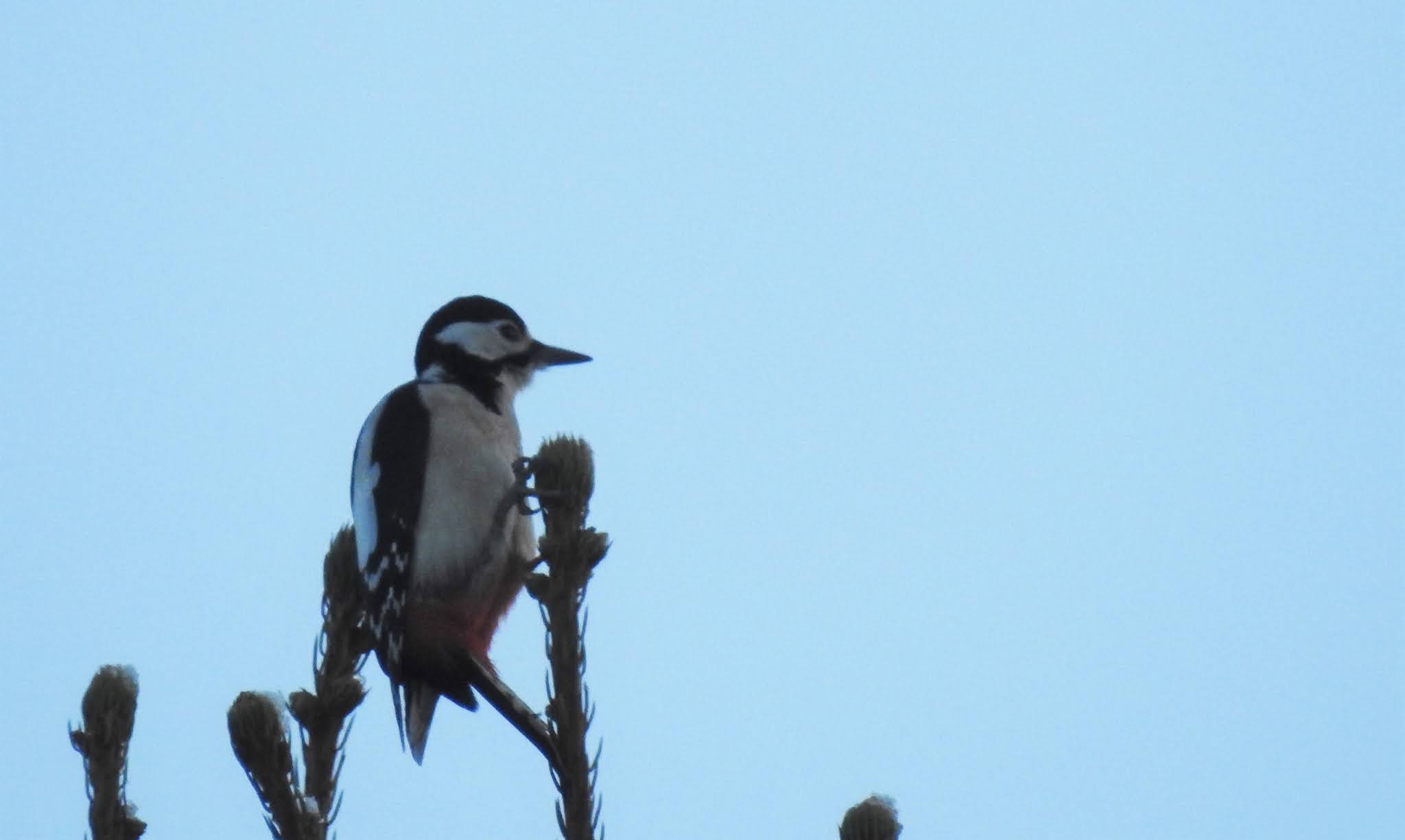
A few photos of more common birds seen locally this month:
 |
| Great Spotted Woodpecker |
 |
| Collared Dove |
 |
| Treecreeper |
 |
| Yellowhammer |
 |
| Greenfinch |
 |
| Blackbird |
 |
| Blue Tit |
 |
| Coal Tit |
 |
| Great Tit |
 |
| Chaffinch |
 |
| Robin |
 |
| Low winter sun over a local lochan |
Adventures 'out of area':
 |
| Lossiemouth East Beach in winter (photo from Jan 2018) |
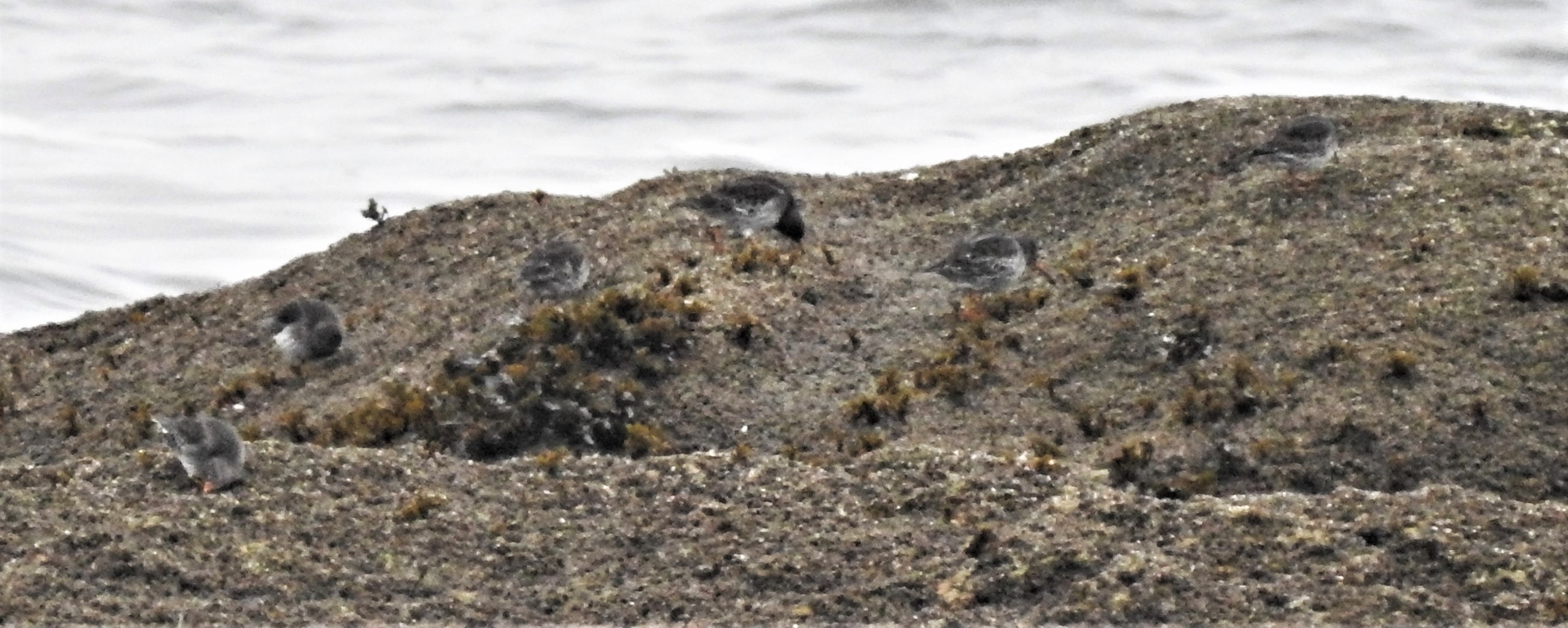
The Moray coast is only about an hour drive north of Aviemore, and my trips to favourite reserves, lochs, bays and harbours gave good views of wintering birds such as Greylag Geese, Pink-Footed Geese, Brent Geese, Barnacle Geese, Whooper Swan, Shoveler, Wigeon, Teal, Scaup, Pintail, Bar-Tailed and Black-Tailed Godwit, Knot, Golden Plover , Grey Plover , Purple Sandpiper, Redshank, Oystercatcher, Turnstone, Curlew, Common Scoter, Red-Throated Diver, Long-Tailed Ducks, and a nice 'year-tick' for me in the form of the now very scarce Grey Partridge....
 |
| Purple Sandpipers |
 |
| Male Red-Breasted Merganser |
 |
| Female Red-Breasted Merganser |
 |
| Female Goldeneye |
 |
| Male Goldeneye |
 |
| Male Teal |
 |
| Male and female Wigeon |
 |
| Eiders |
 |
| Male Eider close-up |
Cormorants
 |
| You know it's seriously cold when the fast flowing local rivers freeze over! |
January 2021 mammal sightings in more detail:
 |
Mountain Hare by Steve Nicklin (photo from Jan 2018)
|
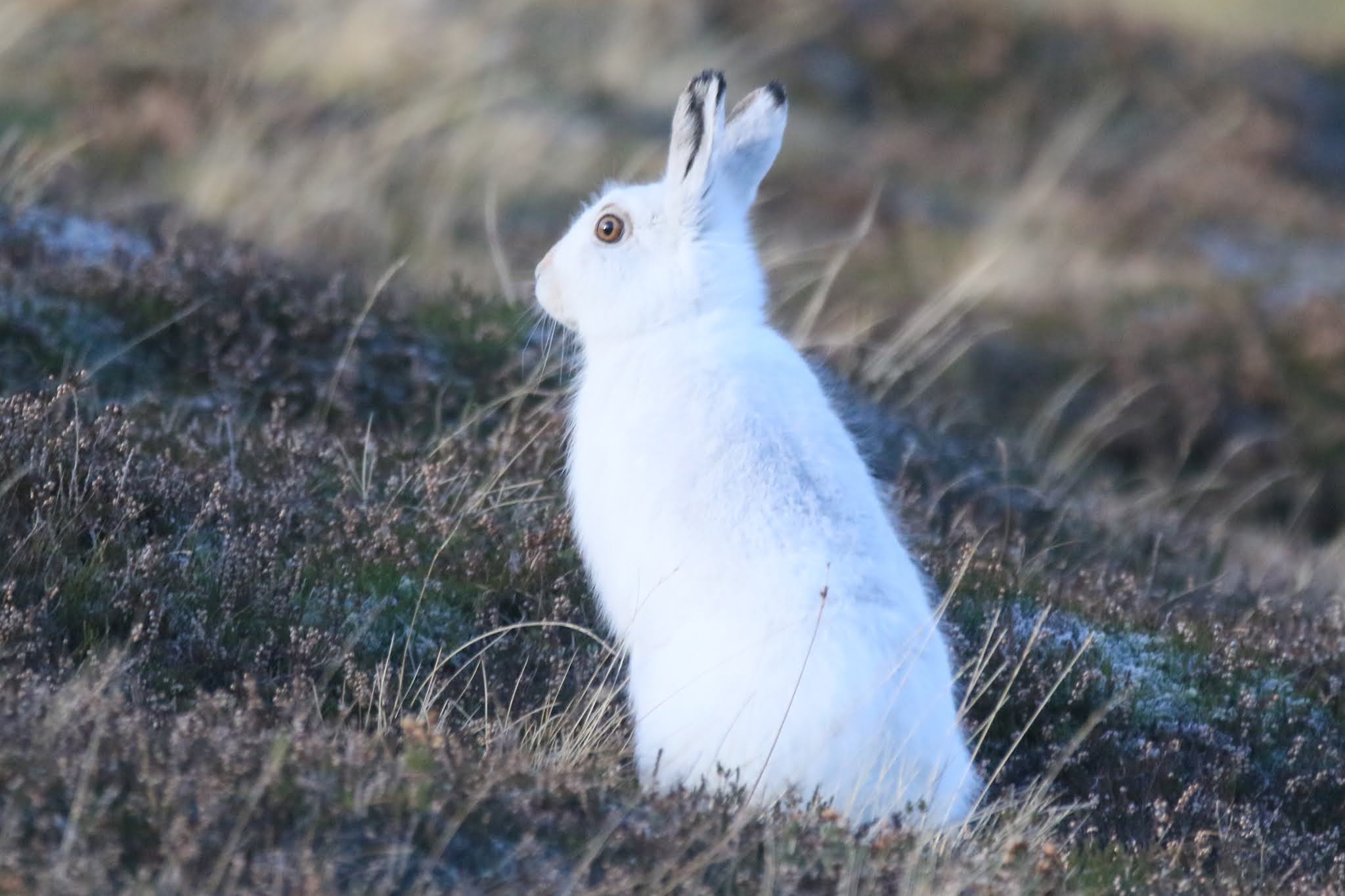
Star mammal for January is usually that much sought-after local speciality the Mountain Hare, and rightly so, as Britain's only native 'lagomorph' and with their distribution being restricted to just a few remote upland areas, seeing one is always a treat.It should be noted though, that most of our views are at range through my telescope, and that a closer view or photo opportunity usually involves some rough uphill walking.
 |
| Red Deer hinds |
 |
Red Deer stags
|
In the same upland glens, Red Deer , mainly in large same-sex herds, can usually be seen, although a number of factors such as the weather, in particular the wind strength and depth of the snow, and whether there is any local shooting activity , can dictate whether we get nice close-up views, or distant views through the telescope....
 |
| Feral Mountain Goats |
Still up in the glens, another local speciality mammal, our Feral Mountain Goats can often seen on the same sheltered sides of the ridges as the Red Deer , and at this time of year it is not unusual to see them with the first , very cute, new-born youngsters ....
 |
| Red Squirrel (photo from Jan 2018) |
Red Squirrels are a true Highlands speciality, and we are usually fortunate enough to see at least one on most of my safaris, mainly chomping on peanuts at forest feeding stations, but with the occasional random sighting whilst walking or driving in suitable habitat.
 |
Roe Deer
|
Roe Deer are most commonly seen at dawn or dusk and generally at the quieter, more remote sites well away from human disturbance, their shy, nervous nature making them much harder to see than Red Deer, despite being considerably more numerous and widespread than their larger 'cousins'...
Although I did get a few early morning sightings of Brown Hare this month, mainly on the quieter farmland areas, they were very fleeting glimpses, and I failed to get a decent photo ...
 |
| Murdo the friendly Highland Coo - He loves carrots! |
Highland Coo's always prove to be popular with my safari clients, especially those who do not have them close to home, so don't be afraid to ask me if you fancy going to see them, and maybe even get to feed and 'pat' them, as I have a couple of great sites....
Rare/nocturnal mammals:
I get a few enquiries about the possibility of seeing Badgers and Pine Marten from my safari clients, many of whom I suspect are unaware that they are actually a largely nocturnal creature, and although we do get the occasional (maybe one or two a year) dawn glimpse of one, you would definitely have a much higher chance of seeing them at a specific dusk Badger/Pine Marten watching hide - Please contact me for more information.
Similarly, our inland Otters too are mainly active during the hours of darkness, and again, although we do get a few early-morning sightings on local lochs and rivers each year, looking for them feeding in a suitably quiet, kelp - filled bay on the coast on a rising tide, but at any time of day, would give you a much better chance.
Whilst we are still on the 'tricky to see stuff', the Scottish Wildcat too, as well as being incredibly rare now, is also generally nocturnal, and the fact that I have had a mere handful of (dawn or dusk) sightings in 17 years of providing wildlife safaris should give you an idea of how difficult they are to see.
 |
| A burn twists it's way through a local ancient Caledonian Forest |
News:
Sadly, with Highland region (and all of mainland Scotland) still placed in Tier 4 until mid February at least - there is not a lot of news to report this month from a personal point of view... but these local wildlife related stories may be of interest...
https://www.gov.scot/publications/coronavirus-covid-19-protection-levels/pages/protection-level-4/
Rare Scottish wildcat kitten saved from 'death's door' after rescuer mistakes it for domestic cat | HeraldScotland
Cairngorms National Park Authority
Highland Wildlife Park
COVID-19
The Scottish Highlands has had very few COVID-19 cases in comparison to most of the UK, and on my safaris we tend to visit remote , wild habitats well away from the more popular tourist areas, and usually have very little interaction with other people, and this is something that I intend to continue.
I can advise that I have not had COVID-19, have no symptoms, and have not knowingly been in contact with anyone who has.
I intend to re-commence providing my wildlife safaris when allowed, subject to the following conditions/changes:
1) Parties will be limited to pre-booked small, preferably connected groups - so no mixing of unconnected parties unless we can do it safely and legally.
2) There will additional COVID-19 related health questions asked at the time of booking.
3) My safari vehicle will be deep cleaned before and after each safari.
4) We will use the middle and rear rows of seats in my vehicle (a spacious Land Rover Discovery 7-seater) in preference to the front passenger seat where possible.
5) Any parties uncomfortable with travelling in my vehicle will have the option to follow me in their own vehicles.
6) Whilst on board my safari vehicle your guide and all clients will be required to wear face coverings.
7) We will adhere to Government social distancing recommendations where possible.
8) All surfaces/equipment touched frequently will be cleaned regularly by your guide.
9) Hand sanitizer will be provided for guide and client use.
10) Clients will be asked to bring their own optical equipment where possible - any loaned/communal equipment will be cleaned regularly.
11) Clients will be asked to provide their own food/drink as we cannot do so at present.
12) Public toilets will be used where possible, with the option to return to client accommodation for comfort stops if required, and 'bush-toilets' only being used as a last resort.
13) If first aid is required, I may need to ask other members of the party to assist.
14) I will require all clients to complete a COVID-19 disclaimer/ infection declaration form.
15) A Health and Safety Executive risk assessment form has been completed and will be displayed in my vehicle..
If you have any questions/queries, please feel free to contact me.
Summary:
Although that was yet another very strange and financially difficult month for me, with all my wildlife-watching adventures being unaccompanied, I am determined to put a positive spin on my summary this time.
My solo walks out and about in the wild and beautiful Cairngorms National Park throughout January have given me lots of time to think, and they have really brought home to me just how important it is to regularly remove yourself from the seemingly endless catalogue of disasters reported on the news, and instead, wrap up warm, put your boots on, and immerse yourself in the great outdoors and it's nature, not just for the obvious and well reported physical and mental wellbeing that it promotes, but also, to help us keep a very important sense of perspective. Yes, I am feeling mentally and financially battered by the pandemic....but...time spent in the great outdoors has helped me to realise a few things.....that the seasons will still happen, the days will get longer, the sun will still shine, the views are still beautiful, flowers are starting to grow, birds are starting to sing, and that the natural world is actually carrying on as normal, blissfully unaware of what is happening in the human world.. Add to that, the fact that surely better times must lie ahead, and I think there are certainly grounds for optimism....so I intend to keep calm (and happy) and carry on as best I can... and I look forward to seeing you all again in the not too distant future...
 |
| The sun rising over a local forest |
Reviews:
I know a lot of visitors to this area very wisely check out reviews of attractions/experiences at Tripadvisor before 'taking the plunge' and booking - if you wish, you can check out my clients comments at the link below....
https://www.tripadvisor.co.uk/Attraction_Review-g186537-d3335134-Reviews-
Highland_Wildlife_Birdwatch_Safaris-Aviemore_Aviemore_and_the_Cairngorms_Scottish.html
Buying my photos:
Due to public demand, prints of any of the photos (taken by myself) shown on this blog, going right back to 2015, reproduced on high quality photographic paper, with a choice of sizes and finishes available, can now be purchased from me at very reasonable prices. So if you see an image that might look nice in a frame on your wall, please make a note of the year and month of my blog in which it appeared, and email me for more information.
Gift Certificates:
 |
Safari gift voucher
|
If you think you know someone who may enjoy a taste of what I do, why not treat them to a safari gift certificate? They make a thoughtful and imaginative present, are available for any amount and are valid at any time within a year from the date of purchase....