Highland Wildlife and Birdwatch Safaris, Guided wildlife excursions, Aviemore, Scotland
Highland Wildlife and Birdwatch Safaris, Guided wildlife excursions, Aviemore, Scotland Highland Wildlife and Birdwatch Safaris, Guided wildlife excursions, Aviemore, Scotland

Friday, October 31, 2014

October 2014 started cool, dry and calm in this area, but ended up wet, windy and unseasonably mild for the time of year, with no fresh snow on the Cairngorms on Halloween for the first time in many years. Though the days are noticeably shortening now, we still had around 10 hours of useable daylight, and the Highland scenery was ablaze with glorious autumn colours, providing many of my safari clients with some very picturesque landscape photos.
A mid-month influx of winter visitors from colder areas further north, helped bird day-lists increase up into the 40's, whilst mammal day-lists varied between 5 and 9 depending on our luck.


Wildlife highlights included:

Local speciality bird species seen regularly during the month included:
Black Grouse, Red Grouse, Dipper, Crested Tit, Golden Eagle, Whooper Swan and 'Grey Geese', with a few glimpses of Crossbill, and a mountain-top adventure also giving views of Ptarmigan and Snow Bunting.

Mammals seen regularly during the month included:
'Rutting' Red Deer, Roe Deer, Reindeer, Rabbit, Brown Hare, Mountain Goat and Bank Vole, with just a few sightings of Mountain Hare, Weasel and Stoat.


The cock Black Grouse on our traditional moorland 'lek' sites, having been largely missing since early June, began to assemble and occasionally even display at dawn, especially on the frosty mornings, with my safari clients seeing an impressive 10 birds on the 2nd.


Our local Red Grouse appeared to still be in their large family groups, and with the shooting season virtually over, they became a little less wary and easier to see, especially when using my safari vehicle as a mobile hide on the tracks through their heather moorland home (see pic above)


Dippers, being birds of fast-flowing, clear-running upland rivers, are largely absent from much of the UK, which means they are always popular with my safari clients. Luckily, they are relatively common on our local rivers, and we managed some good sightings at some of my favourite local sites.

Crested Tit is a true local speciality, with Speyside being their UK stronghold, but with them largely being part of roving mixed species flocks in winter, they can be surprisingly difficult to see.
However, a post-dawn visit to a forest feeding station increases your chances, and we were lucky enough to get some good views on a number of occasions. (see pic above)


Golden Eagle too is truly an iconic bird of the Scottish Highlands, and our regular visits to suitable upland glens paid off on several occasions, with some decent sightings of these majestic raptors being obtained. In fact, I have found that the shorter days of the winter months actually seem to give us more chance of seeing them, as they have less available hours of hunting time....(see pic above)


The same applies to the other birds of prey, with Kestrel, Sparrowhawk, Peregrine, Red Kite and Common Buzzard (see pic above), all being seen on my safaris this month.


Crossbills again proved a little frustrating, with our views being limited to fleeting glimpses of fly-over birds, their 'jip jip' calls alerting us to their presence.


Although not exclusively winter birds of this area, northern Scotland is often the first landfall for the Whooper Swans (see pic above) and 'Grey' Geese arriving from their Arctic breeding grounds, and the second week of the month saw us get our first proper influx, as they fly south to enjoy our (in relative terms!) milder winter weather.


The same could also be said of the 'winter' Thrushes - first the Redwings (see pic above) arrived, shortly followed by the Fieldfares,  and they soon set about pillaging our local berry supplies, much to the annoyance of our resident Blackbirds and Thrushes!


As I mentioned in last month's blog, a Snowy Owl had been seen in the Cairngorm mountains up near the summit of  Ben Macdui. Well, further positive reports early this month, together with a favourable weather forecast, spurred me to take on the challenge on the 17th. The gruelling 5 mile,  4 hour ascent up into the clouds to over 4,000 feet was made bearable by the chance of a much sought-after 'life-tick'... but sadly it was not to be.....despite a thorough search, there was no sign of the target bird... and as far as I am aware it has not been reported since... so it would appear that I missed it by a whisker.... by way of consolation, however, I did get some decent views of  Mountain HareSnow Buntings and Ptarmigan (see pic above)


An unusual bird sighting (inland at least) in this area on the 10th, was a winter-plumage Slavonian Grebe on a local loch (see pic above) -  the vast majority of our birds depart for the coast in early September after breeding....


'Mammal of the month' for October has to be Red Deer, with their spectacular annual 'rut' providing my safari clients with some terrific entertainment - the fully antlered stags spending much of the month roaring, posturing , fighting off rivals and mating with as many of their 'harem' as possible - surely one of British nature's 'must-see' experiences? (see pic above)


...With second place going to the ever popular Red Squirrels, (see pic above) who can usually be relied upon to appear for a free feed at forest feeding stations.....

So, to summarise, October 2014 turned out to be another excellent month for wildlife watching in the Cairngorms National Park, with plenty of good sightings, many memorable experiences and the odd surprise, all against a beautiful autumnal Highland backdrop.......


Tuesday, September 30, 2014

September 2014, after I 'officially announced' the end of Summer and start of Autumn in my last blog update, of course, then turned out to be one of the warmest and dryest on record! I suspect the Met Office will not be offering me a job anytime soon.....
Though there were no real extremes of weather, the days are shortening noticeably with only around 12 hours of usable daylight now, but by way of compensation, many trees are full of colourful berries, and the leaves and ferns are starting to change colour into their attractive autumnal hues.....
I was away visiting relatives and friends for a good part of the month, so my report will be shorter than usual, and will contain some general observations and pictures from previous Septembers.....
With all the summer visiting bird species gone by mid-month, and the winter visiting bird species not yet arrived, bird day-lists remained in the 30's, whilst mammal day list varied between 5 and 9 species.


Wildlife highlights included:

Local speciality bird species seen regularly during the month included: Osprey (first week only), Dipper, Red Grouse, Crested Tit and Goldeneye, with a couple of sightings of Golden Eagle....

Mammal species seen regularly included: Red Squirrel, Red Deer, Reindeer, Roe Deer, Mountain Goat and Rabbit......with just a couple of brief glimpses of Stoats ... 


A few of our local Ospreys (see pic above) lingered around their now redundant nest sites for a few days early in the month, giving us our last chance to admire these impressive raptors and their fishing skills, until they return in the spring.......


The Dippers (see pic above) on our local rivers appeared to be getting a little territorial, with some aggressive behaviour being witnessed near to prime nest sites, especially at first light...


The Red Grouse on the upland moors, many still in large family groups, continued to entertain my safari clients, and by using my vehicle as a mobile hide, we were often able to get some decent photographic opportunities (see pic above)


Crested Tit is always high on my safari clients 'wish-lists', and although they are mainly to be found in mixed flocks roaming around the Caledonian pine forests, we also managed to get some decent views of them at my feeding stations soon after first light (see pic above by Steve Simnett)


Golden Eagles are probably more commonly seen on my safaris during the short days of winter, when they have less hours of daylight in which to hunt, but a safari on the 20th saw us enjoy fairly distant, but still excellent views of a pair of sub-adult birds spend over an hour 'herding' a group of Red Deer hinds towards a precipitous cliff edge in a local upland glen, presumably in the hope that one or more would fall to their death, and provide them with venison for the next week or more! An amazing spectacle! (see pic above). Raptors in general seemed to be pretty active throughout the month with us seeing Peregrine, Red Kite, Common Buzzard, and Kestrel regularly as well...

Our local Goldeneyes appear to have had a good breeding season, with some large family parties still showing on our lochs, though the male birds always seem to disappear for the late summer and autumn....

Whilst I was away on my holiday, reports reached me of a Snowy Owl being sighted on the slopes of Ben Macdui - our highest mountain in the Cairngorm range. This is an extremely rare bird in the UK, and most sightings are usually confined to the northern and western isles of Scotland, so a mainland bird will be a 'must-see' for many 'twitchers'! As yet, I have not managed to make the trek up to try and see it, having been thwarted by bad weather on more than one occasion! But watch this space............


With the number of bird species available probably at it's lowest in September , mammals featured highly on my safaris, and towards the end of the month we began to notice some of the larger Red Deer stags starting to show signs of preparing for the forthcoming 'rut', with much roaring and aggressive posturing from elevated positions (see pic above)


Red Squirrels (see pic above) again put a smile on many of my safari clients faces, especially those seeing these attractive and characterful creatures for the first time...

So despite my absence for half of it, September 2014 actually turned out to be a pretty good month for wildlife watching in this area with some very memorable and enjoyable experiences, all in spectacular scenery, and with the winter visiting birds due to arrive, and the Red Deer rut looming, I am already looking forward to October....


Tuesday, September 02, 2014

August 2014 was very strange weather-wise in this area! Starting with rain and floods of near biblical proportions! , it then dried up a little, but turned much cooler and autumnal, with even a few dawn frosts towards the end of the month. The days are noticeably shortening now, but we still have 14-15 hours of usable daylight this far north. With many of our summer visiting bird species departing this area for their wintering areas throughout the month, it was inevitable that bird day-lists would reduce down into the 30's, whilst mammal day lists varied between 6 and 9 species, with earlier starts generally proving more successful. The Highland scenery is extremely picturesque now, with the heather is at it's beautiful purple best,  the ferns turning coppery gold, and the Rowan trees fully laden with brightly coloured berries.


Wildlife highlights included:

Local speciality bird species seen regularly included:
Dipper, Red Grouse, Crested Tit, Goldeneye and Goosander, whilst Osprey, Slavonian Grebe, Red-Throated Diver, and Black-Throated Diver were all seen early-month but sightings became less frequent after mid-month, and we also had a few views of Crossbills and Golden Eagle...sadly, Capercaillie and Black Grouse were not seen at all, though that is not unusual at this time of year....

Mammal species seen regularly included:
Red Squirrel, Roe Deer, Red Deer, Reindeer, Mountain Goat, Stoat and Rabbit, with just a few sightings of Brown Hare, Mountain Hare, Sika Deer and Bank Vole...and one memorable early morning encounter with a fishing Otter!


Osprey was again probably most frequently voted as 'bird of the day' by my safari clients in the first half of the month - hardly surprising I suppose when you consider that they are impressively large and attractively marked, and provide additional "wow" factor when seen plunge-diving or carrying fish! (see pic above)


As I mentioned last month, Slavonian Grebe is a very rare breeding bird in this area, so it was a real treat to be able to see at least 2 pairs with youngsters learning to fish and fly on our local lochs before they departed around mid-month.... (see pic above)


It was the same story with our local Red-Throated Divers (see pic above) and Black-Throated Divers, both species of which were seen to have bred successfully, but they too appeared to have vacated this area by the end of the month....


Our local Red Grouse showed well in large family groups on suitable heather moorland early in the month (see pic above), though not surprisingly, those on 'managed' moors became noticeably more wary of humans after the 'glorious' 12th......

Crested Tits, as I explained last month, are now in their 'mixed winter flocks' of  6 or more different bird species 'working' through our local Caledonian pine forests... so to see the 'Cresties' you have to first find a flock, then listen out for their distinctive chuckling trill , then try and pick them out as they move annoyingly flittily through the branches - not an easy feat! , but, satisfyingly for me as a guide, we managed it on a good number of occasions, with many of my safari clients obtaining a difficult and  much sought after 'life-tick' (see pic above)

Dipper sightings were a little up and down, rather like the rivers, as water levels fluctuated in height so much, but we managed a reasonably good success rate by employing my favourite tactic of using a raised bridge vantage point to stake-out a likely looking stretch with plenty of exposed rocks...

Golden Eagle sightings were a bit scarce, and mostly of the very distant variety, apart from one memorable close encounter on the 29th with a juvenile bird seen at quite close range and unusually low to the ground 'duelling' with a Common Buzzard in a secluded upland glen, it's white wing patches and tail base showing well against the 'solid' background....


Raptors in general were seen more frequently than last month, with Common Buzzard, Kestrel, Peregrine (see pic above) and Sparrowhawk all regulars , and Red Kite and Hen Harrier sighted at least once....

Although our Dotterel appeared to have vacated the mountain tops by early August, it was still possible to see large family groups of Ptarmigan and small groups of Snow Buntings with a bit of persistence, although there were very few days that were good enough weather-wise to attempt a 'mountain mission'....


With some of the summer visiting local speciality birds departing this area, mammals became more of a focus on my safaris, and we were fortunate to see a good variety throughout the month. The winner of my guests 'mammal of the day' award was invariably the Red Squirrel (see pic above) - with many of my safari clients getting their first ever sighting of these very endearing and attractive 'Highland speciality' animals.
The Red Deer often ran a close second though, especially when a stag was seen on the ridges of a beautiful upland glen in true 'Monarch of the glen' style (see pic below)


We had a number of good sightings of Stoats this month, especially groups of playful youngsters, including the amazing spectacle of a 'ball' of several 'wrestling' youngsters rolling down a moorland road in front of my safari vehicle! You will be pleased to hear that they 'exploded' off safely in different directions when they finally noticed us approaching!


Butterflies showed well early in the month, including our local speciality the Scotch Argus (see pic above), although sightings reduced noticeably as the temperatures dropped later in the month....


One good thing about the floods this month was the rising rivers finally giving the Salmon the chance to make their way upstream towards their spawning grounds, with trips to a couple of known 'Salmon leaps' (see pic above) providing decent views of these iconic fish completing their amazing migration....


So August 2014 turned out to be a pretty good month for wildlife-watching in the Cairngorms National Park, with lots of good sightings, many memorable experiences, great scenery and a few nice surprises like the Otter and the Stoats, putting smiles on the faces of my safari clients who were visiting Scotland from all around the world......


Friday, August 01, 2014

July 2014 started with cool, showery weather in this area, but it soon warmed up and was generally a calm, dry, sunny month, giving us some excellent wildlife watching conditions. Although the days are shortening slightly now, this far north there is still around 18 hours of usable daylight. Bird species day lists dropped a little, down  into the 40's, as some of our wader species moved away from their upland breeding grounds to the coasts, whilst mammal day lists varied between 5 and 9 , with early starts generally producing more sightings. With the heather starting to turn purple, and the wild flowers and butterflies at their most abundant, Speyside really is a beautiful place to be.


Wildlife highlights included:

Local speciality bird species seen regularly, many of them with youngsters, were:
Osprey, Slavonian Grebe, Goldeneye, Red-Throated Diver, Black-Throated Diver, Dipper, Crested Tit, Red Grouse and Golden Plover, with  a few sightings of Crossbill and Golden Eagle, and just single views of Merlin and Goshawk... whilst Ring Ouzel, Black Grouse and Capercaillie were not seen at all.....

Mammal species seen regularly included:
Red Squirrel, Roe Deer, Red Deer, Reindeer, Rabbit and Mountain Goat, with just a few sightings of Mountain Hare, Brown Hare, Stoat, Weasel, and Bank Vole...


Our local Ospreys stole the show again this month, with the adult birds seen fishing and delivering fish to the fast growing 'scaly' looking youngsters, who by mid-month had fledged and were seen perched (see pic above), flying and fishing for the first time.. I can highly recommend July as THE month for Osprey watching and photography in this area...

Slavonian Grebes, surely one of our rarest and most beautiful British breeding birds, have struggled to breed successfully in this area in recent years, so it was great to see several of our local nesting pairs with young this month (see pic above). We were even lucky enough to see the newly-fledged chicks taking a ride on the back of a parent on one occasion!

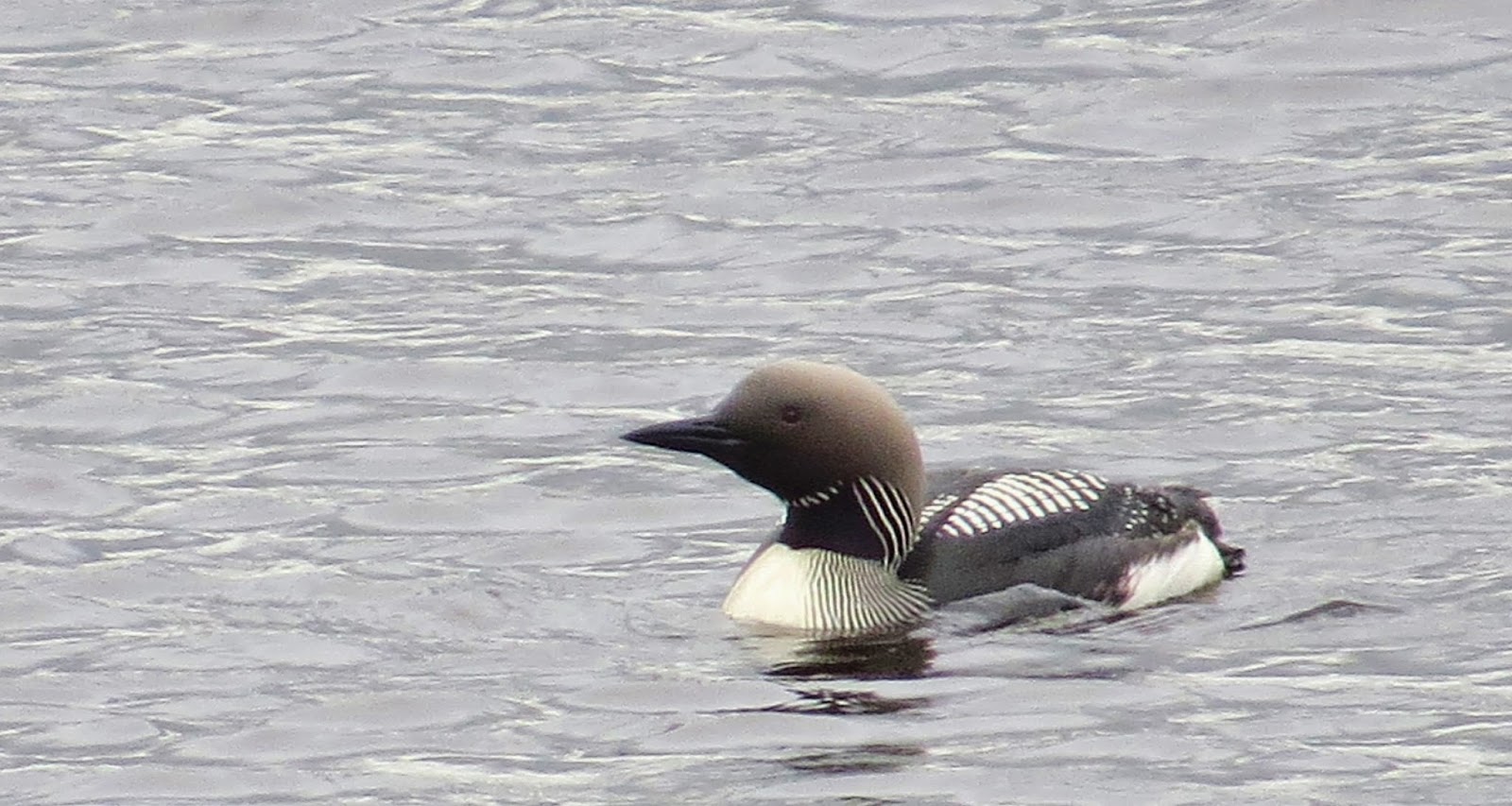
Divers in their dapper summer plumage are always popular with my safari clients, and we were fortunate enough to get lots of good views of both Red-Throated (see pic above) and Black-Throated (see pic below) on their favoured local lochs throughout the month, though it should be noted that they are easily disturbed by non wildlife-friendly tourists swimming and boating etc, so early starts in search of them usually gave us our best sightings....

Dippers are probably at their least territorial during mid-summer, seemingly covering a much longer stretch of river than usual,  which can make them more difficult to see than you might imagine.....but my favourite tactic of 'staking-out' a likely stretch of river from a bridge vantage point paid off on a number of occasions.

Crested Tits tend to join up with numbers of birds of several different species in 'mixed flocks' from July onwards. This means you first have to find one of these flocks 'working through' the forest, then you have to try and pick out the 'Cresties' - you really need to know their distinctive songs and calls to have a decent chance of success though....


Red Grouse are always popular with my safari parties, as being a bird of northern upland moors, most of my clients do not have them near to their homes. We are fortunate to have lots of suitable moorland in this area, and throughout the month we enjoyed good close up views of families of these beautifully marked birds (see pic above)

Golden Plover too, are a bird of upland moors during the breeding season, and they are at their most colourful now too. So it was good to get some very nice sightings and  photo opportunities (see pic above)

Crossbills, sadly proved to be a bit elusive again this month, with most of our sightings being of the 'fly-over' variety, and only a couple of all too brief views of birds perched......

Golden Eagle sightings too were a bit hard to come by, with just one decent view achieved, though this is not that unusual in this area at this time of year...

Still on the subject of raptors, a Merlin was seen hunting low and fast over a local moor on the 10th, whilst I was also lucky enough to get a decent view a Goshawk flying powerfully between two forests on the 12th....

Whilst enjoying a family picnic at a secluded local loch on the 20th, I was surprised to hear an unusual repetitive, whistling 'wet my lips, wet my lips' call coming from the marshy area around the feeder stream, which I recognized as that of a Quail - a rare bird this far north.... but despite a good 30 minutes of thorough searching,  sadly, I failed to get a sighting of what would have been a 'life-tick' for my UK bird list.....


July is 'last chance saloon' for seeing all 3 of our mountain top species in one hit, and although I did not get the opportunity to take to the hills to see them, Ptarmigan, Dotterel and Snow Bunting were regularly reported by those that did...

Mammals featured well this month, with early mornings providing most of our best sightings. Roe Deer (see pic above) were heard 'barking' as they 'rutted' in suitable lowland areas. Red Deer were seen in upland glens in large same-sex herds, the hinds with their fast-growing young always nearby (see pic below)


But invariably, the winner of my safari guests 'mammal of the day' award was the Red Squirrel, with these beautiful and charismatic little animals often allowing good opportunities for close-up photography, with one incredibly confiding and brave youngster actually clambering all over me and my safari party on the 10th - an amazing and memorable experience!! (see pic below)


Butterflies of many species were 'on the wing' throughout the month, adding even more colour to local wild flower meadows, including our local speciality, the Scotch Argus (see pic above)

So it looks like July 2014 was yet another excellent wildlife watching month in the Cairngorms National Park, with many memorable moments and lots of local specialities seen and enjoyed.... though I must confess that I always tend to feel just a little sad towards the end of every July , as I know that many of our summer visiting birds are soon to vacate our area and fly south to warmer climes as summer turns to early autumn next month.....


Monday, June 30, 2014

June 2014 was a pretty decent month for wildlife-watching in the Cairngorms National Park weather-wise, with plenty of warm, sunny days interspersed with a few cool and drizzly ones, which all helped to maintain the lush, green appearance of the spectacular highland scenery. The wild flowers are approaching their colourful best now, and the heather is turning purple ,with lots of butterflies on the wing, and with nearly 20 hours of usable birding daylight for those with the stamina to attempt it, bird species day-lists were regularly in the 50's or even 60's.  Just about every bird species appears to have youngsters now, and with no extreme or prolonged bad weather encountered, hopes are high for a good survival rate.
Mammal species day-lists ranged between 6 and 10, with early starts usually providing the best sightings.
I am proud to say that all the pictures shown below were taken either by myself or my clients on my safaris during June.

Wildlife highlights included:

Local speciality bird species seen regularly this month included:  Osprey, Black Grouse (early in the month only), Red Grouse, Ring Ouzel (up to mid month), Crested Tit, Red-Throated Diver, Black-Throated Diver, Slavonian Grebe, Dipper, Goldeneye and Goosander, with just a few sightings of Crossbill, Capercaillie and Golden Eagle.

Mammal species seen this month included: Rabbit, Brown Hare, Mountain Hare, Roe Deer, Red Deer, Fallow Deer, Reindeer, Mountain Goat, Stoat ,Bank Vole, the Moray Firth Dolphins and coastal Seals, and a couple of lucky early morning glimpses of Pine Marten.

Osprey is probably the 'star bird' of the summer months up here (see pic above) - with my safari parties being fortunate enough to see them plunge-dive spectacularly to catch a fish or delivering a fish to the nest on a number of occasions, and great views of the adult birds and their rapidly growing young in the nest...

Our local Black Grouse rather surprisingly, continued to lek well into June, with a pre-4am arrival giving us the opportunity to see the amazing 'Blackcock tango' for the last time this year.. (see pic above)

Red Grouse were not too difficult to find on suitable areas of heather moorland, and if you could spot the heads of the adults above the heather, you then usually got to see their large families of fast-growing youngsters too... (see pic above)

Ring Ouzels showed well in upland habitats near their nesting and feeding areas early in the month (see pic above), but became noticeably more elusive as the month progressed and they began to roam further afield....

Crested Tits actually became a little easier to see this month, as the family groups foraged together through our local Caledonian Pine Forests (see pic above by Malcy Fincham), though it should be noted that you really need to know their distinctive song and calls in order to be able to find them....

Crossbills  were generally a bit elusive, though one day of serious 'forest bashing' eventually provided us with some decent views... (see pic above)

Both Red-Throated Divers and Black-Throated Divers in their dapper summer plumage, were seen regularly on suitable secluded local lochs, though we generally had our best views on calmer days, with no ripple on the water, and early and late in the day, when human disturbance was it it's lowest....

Slavonian Grebes, also in their beautiful summer plumage, were seen and enjoyed regularly by my safari parties on their favoured quiet lochans, though we could not confirm any much-needed breeding success as it appeared that several of their nests had been abandoned due to predation, disturbance or flooding.....

Golden Eagle is not usually an easy bird to see in the summer months, as they have so many hours of daylight in which to hunt. It is just a case of putting yourself in a likely site , and hoping you get lucky... fortunately we did on several occasions, with the best encounter seeing us observe one bird stalking young feral Mountain Goats along a ridge!!

Capercaillie can be a very difficult bird to see outside of lekking season, and for most of the month this proved to be the case.... but the final week saw us get lucky with two all too brief sightings of females with youngsters....

June is probably THE best month to visit the high tops in search of the mountain species, as it is about the only month that they should all definitely be on territory and the weather is usually good enough to attempt it! So the 12th saw a small party of us visit a local summit, where, after a fair bit of searching, we were pleased to get good views of Ptarmigan (see pic above) and Dotterel (see Malcy Fincham's pic below). Though the Snow Buntings managed to elude us....


Other 'good' birds seen regularly this month, include a few species that seem to breed more commonly in northern and upland areas, like Golden Plover (see pic above), Wood Warbler, and Spotted Flycatcher (see pic below) , and although I am lucky to see them regularly, they are often a good 'year-tick' for my guests from further south.....

Another bird which is often a tricky 'year-tick' to get is the Woodcock - it's crepuscular nature, means that all most birders really ever get to see is a dusk silhouette view of one 'roding' above a wood, or a brief glimpse of one fleeing the roadside leaf litter on a forest track at dawn... so we were amazed and delighted when one walked across a remote woodland track and then posed briefly under the shadow of a tree for a few seconds in the middle of the day! (see pic above). To say I was pleased with the pic I got is possibly the understatement of the year!!

June is also probably the best month in which to visit a coastal seabird colony, so taking advantage of a favourable weather forecast, we took a day trip up to the north-west coast to the wonderfully remote and beautiful  Handa Island. Even the short ferry crossing from Tarbet gave us super close-up views of Seals, Black Guillemot and Red-Throated Diver, and once on the island, after our welcome talk by the SWT wardens, we went on to see  Snipe, Red Grouse, Wheatears, Skylarks, and Arctic and Great Skuas galore nesting on the moors. Once at the impressively high cliffs and coastal stacks, we were treated to the unique sights, sounds (and smells!) of good numbers of  Fulmars, Kittiwakes, Razorbills, Guillemots, and yes, everybody's favourite - Puffins! (see pic above)

Dolphins are always high on most people's mammal wish-list when visiting coastal areas, and we are lucky to have probably the best land-based site in the UK nearby at Chanonry Point on the Black Isle, north of Inverness. A visit at the right stage of the tide on the 15th gave us superb close-up views of these entertaining and charismatic animals... (see pic above)

So it looks like June 2014 can go down as yet another great month for wildlife-watching in and around the Cairngorms National Park, with the wide range of habitats visited producing a splendid variety of birds and animals, and all in wonderfully scenic surroundings.....