Highland Wildlife and Birdwatch Safaris, Guided wildlife excursions, Aviemore, Scotland
Highland Wildlife and Birdwatch Safaris, Guided wildlife excursions, Aviemore, Scotland Highland Wildlife and Birdwatch Safaris, Guided wildlife excursions, Aviemore, Scotland

Tuesday, March 31, 2015

March 2015 was a bit of a mixture weather-wise in this area, starting off cold and wintry, turning milder with some sunny days mid-month, and finishing with a wet and windy spell, but in contrast to much of the UK, it was most definitely still winter this far north, and anyone considering visiting this area in March should remember to bring the appropriate clothing!
The days are stretching out nicely now though, with nearly 12 hours of usable daylight, and dawn (for the Black Grouse lek) is a still not too unsociable 5:45am.
With most of the winter visiting birds still here, and a few wader and water bird species returning to their inland breeding sites in the second half of the month, bird species day-lists crept up towards the 50 mark, whilst mammal species day-lists varied between 5 and 9 depending on our luck and the habitats visited.

I was away down in southern England and Malta for much of the latter part of the month, so my local sightings report will be a little shorter than usual and may include a few photos from previous March safaris.

A favourite local upland glen


Wildlife highlights included:

Local speciality and upland bird species seen regularly throughout the month included: Dipper, Crested Tit, Black Grouse, Red Grouse, Golden Eagle and Whooper Swan ... a couple of memorable encounters with our local 'rogue' Capercaillie (early month only),  a few brief sightings of Crossbills... and towards the end of the month, our first local sightings this year of Slavonian Grebe, Red-Throated Diver, Black-Throated Diver and Golden Plover - all in splendid summer breeding plumage. 
Although I personally did not go on any mountain top adventures for Ptarmigan and Snow Bunting this month, I understand that they could be seen well on the few days where the weather was suitable....


Mammals seen regularly during the month included: Red SquirrelRabbit, Brown Hare, Mountain Hare (white), Roe Deer, Red Deer, Reindeer, Bank Vole and Mountain Goat,  with just a few glimpses of (white) Stoat...and a solitary Weasel sighting.

Capercaillie

I make no excuses for featuring our local rogue Capercaillie as 'star' bird again this month, as he continued to impress, amaze (and even scare!) those fortunate enough to see him displaying and posturing aggressively on 'his' patch of forest - a truly magical and unforgettable experience! I only visit this bird from January up to mid March, as 'lekking' season visits (mid March - end of May) are not only illegal, but could disturb the 'lek' and prevent breeding of this already very rare species....

Black Grouse 'lek'

Dawn on my safaris was again spent at a local Black Grouse lek site, where we enjoyed the spectacle of good numbers of attractive blue-black cock birds displaying, posturing aggressively and flutter-jumping in a bid to out-perform and intimidate their opponents and secure mating rights with the hen birds, all accompanied by their strange bubbling and whooshing calls drifting across the moor... surely one of British wildlife's 'must-see' (and 'must hear') experiences?

Red Grouse


Our local Red Grouse too, most definitely have breeding on their minds, as the cock birds are now very aggressive and vocal, their bulging red 'eyebrows' seemingly glowing! This makes them much easier to spot and hear on their vast heather moorland habitat, and many appeared to have 'paired-up' already.....

Crested Tit

Crested Tit is a local speciality of the Cairngorms National Park, and we managed to get some excellent views of these characterful little birds at forest feeding stations on several occasions throughout the month, and although they can be very 'flitty', rarely 'settling' for long, we still managed a few good photo opportunities.

Dipper

Dippers always seem to be popular with my safari clients, and, as long as the rivers are not badly flooded, my favourite vantage points usually produce decent sightings...
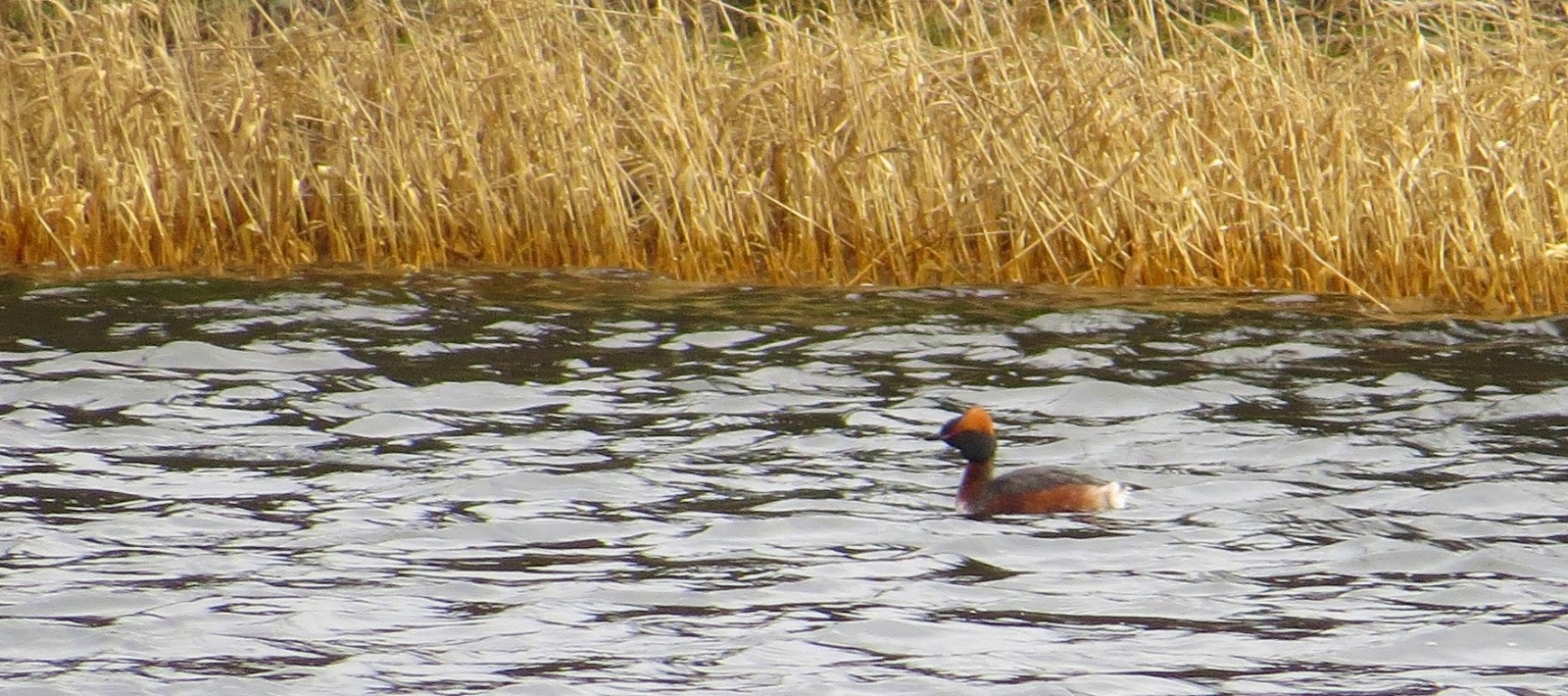
Slavonian Grebe

The end of the month saw some of our most attractive water birds return to their inland breeding lochs, all now displaying their dapper summer plumage, and although I was unable to get any decent photos of  Red-Throated Diver or Black-Throated Diver, I did manage to get a few half-decent shots of Slavonian Grebe .....

Red Kite

Bird of prey sightings were again excellent this month, with Kestrel, Common Buzzard, Sparrowhawk, Red Kite, Peregrine and Golden Eagle all seen regularly, with some of these species observed displaying or carrying nesting materials....We also had another solitary sighting of a Merlin..... and although I have yet to see one yet, the first returning Ospreys have been reported....


Oystercatchers


The list of waders returning to their summer breeding grounds continued to grow, with Curlew, Redshank and Golden Plover joining the Oystercatchers and Lapwings .....

Onto mammals now....

Mountain Hare

March is the last month to see Mountain Hares in their beautiful all-white winter coats, and they again proved popular with my safari clients, presumably because they are confined to upland areas of the UK, and are not easily accessible to most wildlife watchers..

Red Deer Stag

The same upland glens also gave us more good views of Red Deer and feral Mountain Goats, and it was good to see them able to feed more easily with the snow slowly going.....

Common Toad

And on to Amphibians! The warmer weather saw the emergence firstly of our local Frogs and then Toads. I couldn't ever remember photographing either of these species, so I thought I would have a go, and got some quite pleasing results....

As I mentioned earlier, I spent the mid part of the month visiting relatives and friends down in the South - East of England, where I also managed to sneak in a bit of birding, adding southern specialities, but  northern scarcities, such as Woodlark, Dartford Warbler, Great Grey Shrike, SpoonbillNuthatch and Ring-Necked Parakeet to my growing 'year-list'...

Malta is maybe not high up on many UK birders 'wish-list' of places to visit, what with it's historic reputation for high levels of hunting and trapping of birds - but maybe it now should be? Thanks mainly to the efforts of Bird Life Malta (www.birdlifemalta.org), though it is still not a completely satisfactory situation, recent years have seen a big improvement in attitude, the education of  Maltese schoolchildren about conservation, the creation of a number of new bird reserves, and stricter new hunting regulations imposed, meaning that there has been a decent reduction in the activities of the bird hunters, with a national referendum due in April which will hopefully see all spring hunting banned! Add this to it's location on the 'migration flyway' between Africa and Europe and there is scope for some pretty decent birding, especially in spring and autumn - my last four short mid-March visits have given me sought-after species such as Bluethroat, Hoopoe, Alpine Swift, Sub-Alpine Warbler, Honey Buzzard, Black Kite, Trumpeter Finch, Black-Winged Stilt, Ashy - headed Yellow Wagtail, Black-necked Grebe, Marsh Sandpiper, Wryneck and many more..... add these to the Maltese endemics such as Blue Rock Thrush, Fan-tailed Warbler and Sardinian Warbler, and a nice bit of late winter sunshine, and you can see that maybe it is worth considering a visit yourself? I am proud to be a member of Bird Life Malta, and would urge as many UK birders as possible to join too, to help them with their valuable work in protecting what are in all probability some of OUR breeding birds, during their stay on Malta......

So, to summarise, March saw the end of the extreme winter weather in the Cairngorms National Park, meaning no problems with accessing the more remote sites, this helped us to enjoy another excellent month of very enjoyable wildlife watching. With spring approaching, we are now entering my favourite part of the bird-watching calendar, and I look forward to updating you again in another month, hopefully with stories of more great sightings, and some decent photos too...

Insh Marshes


Saturday, February 28, 2015

February 2015 was still very wintry in the Cairngorms National Park with regular frosts and snow at times, but thankfully, we had more safari-friendly days than we did in January! This allowed us to get out and enjoy some very successful and memorable wildlife-watching days in the beautiful Highland scenery. The days are definitely lengthening now, with over 10 hours of usable daylight, and dawn is still a relatively user-friendly 6:45 am. With a few wader species returning to their inland breeding sites, bird species day-lists crept up over the 40 mark, whilst mammal species day-lists varied between 6 and 9 depending on our luck and the habitats visited.

Cairngorms moorland at dawn


Wildlife highlights included:

Local/upland/winter bird species seen regularly during the month included: Dipper, Crested Tit, Black Grouse, Red Grouse, Golden Eagle and Whooper Swan ... several memorable encounters with our local 'rogue' Capercaillie.....  a few brief sightings of Crossbills... and single sightings of WaxwingGoshawk and Merlin.......sadly, the weather was just too bad, or the mountains just too busy with snowsports enthusiasts to attempt mountain treks in search of Ptarmigan and Snow Bunting......

Mammals seen regularly during the month included: Red SquirrelRabbit, Brown Hare, Mountain Hare (white), Roe Deer, Red Deer, Reindeer, Bank Vole and Mountain Goat (with young), with a few glimpses of (white) Stoat....and a solitary Mole!, but the 'mammal of the month' award has to go to the Otter family (Mother and 2 cubs) that we watched frolicking and heard 'squeaking' at dawn on the 7th, on a snowy river bank, before they slid into the water and swam directly under the bridge we were standing on! A magical start to our day.....

Capercaillie

The 'bird of the month' award has to go to our local 'rogue' Capercaillie, who, after disappearing from his favourite patch of Caledonian pine forest for much of the year, reappeared in spectacular style early in the month, calling , displaying and occasionally even advancing towards us in aggressive fashion! A truly magnificent and iconic, but sadly now very rare bird of the Scottish Highlands, who once seen is surely never forgotten!

Crested Tit

Crested Tit too, could quite rightly be called an iconic bird of the Scottish Highlands, and we were fortunate enough to get good views of these delightful little birds at my forest feeding stations on many occasions throughout the month, and although they can be very 'flitty', never seeming to be still for long, we did manage a few good photo opportunities.

Black Grouse displaying

Dawn on my safaris is usually spent at a local Black Grouse lek site, where we enjoy the spectacle of up to a dozen splendid blue-black cock birds displaying, posturing aggressively and flutter-jumping in a bid to out-perform and intimidate their rivals and secure future mating rights with the hen birds, whilst their strange bubbling calls drift across the moor... surely one of British wildlife's 'must-see' (and 'must hear') experiences?

Red Grouse (female)

Our local Red Grouse too, seem to have breeding on their minds, as the cock birds are becoming noticeably more aggressive and vocal, making them much easier to spot and hear on their vast heather moorland habitat,  and some appeared to have 'paired-up' already.....

Dipper

The same could be said of our local Dippers too, with visits to my favourite river sites giving us good views of these upland river specialities seemingly prospecting nest sites, and occasionally singing and displaying to a prospective mate......

Goosander (female)

Those same river sites also provided lots of sightings of a bird that I probably take for granted as I see them regularly, but which, from talking to my safari clients is not a common sight on most rivers around the UK as it tends to favour upland areas - the Goosander, an attractively marked fish-eating species of sawbill...

Whooper Swans

With the slightly less cold weather, our local lochs thawed, and Whooper Swans were again seen regularly, with one of my favoured sites giving us some great close-up views and photo opportunities of these very attractive winter visitors....

Waxwing

Talking of attractive winter visitors...... they don't come much more attractive then a Waxwing, and although they have generally been very scarce in the UK this winter, we were lucky enough to have a solitary bird regularly visiting berry bushes in a local garden for a few days mid-month.....

Common Buzzard

Bird of prey sightings were excellent this month, both in quantity and quality, with Kestrel, Common Buzzard, Sparrowhawk, Red Kite, Peregrine and Golden Eagle all seen regularly, and many of these species observed displaying or carrying nesting materials....We also had a solitary sighting of a Merlin dashing across a moor..... Star raptor this month though, had to be the very impressive Goshawk that we witnessed attempting (and only narrowly failing) to seize a Blackcock from a dawn lek on the 21st - not something you see every day!!!


Mountain Hare
Onto mammals now....

Mountain Hares in their winter white coats are nearly always on my safari clients wish-lists, with them being confined to largely uninhabited upland areas of the UK, and with the snow receding a little, they became much less difficult to find as their camouflage became less effective, and I managed to get us some good close -up views and photo opportunities......

Red Deer stags

The same upland glens also gave us good views of Red Deer and feral Mountain Goats, and it was good to see them able to feed more easily with much less snow around......

Feral Mountain Goat
So to sum up, February continued our good start to the safari year, with plenty of local specialities, a few winter visitors and even a few unexpected bonuses... and with winter finally coming towards it's end and spring on the horizon...we are fast approaching my favourite time of the year.....


Ruthven Barracks and Monadhliath Mountains

Friday, January 30, 2015

January 2015 could certainly be fairly described as wintry in this area! With the average temperature well below zero, and some nights seeing minus 13c, and regular heavy snowfall and occasional gales, good wildlife watching days were few and far between! However, by being flexible, and cherry-picking the best days weather-wise, we did still manage some pretty enjoyable adventures out 'in the field', with the excellent off-road and winter weather abilities of my Land Rover Discovery proving to be a necessity! The days are noticeably lengthening now, with over 9 hours of usable daylight, and dawn is still a relatively sociable 7:30am. Bird day-lists averaged 35-40 species, whilst mammal species day-lists varied between 5 and 9 depending on our luck.


Wildlife highlights included:

Local/upland bird species seen regularly during the month included: Dipper, Crested Tit, Black Grouse, Red Grouse, Golden Eagle and White-Tailed Eagle.....with just a few brief sightings of Crossbills... whilst sadly, Capercaillie proved elusive, and the weather was just too bad to attempt mountain treks in search of Ptarmigan and Snow Bunting......


Mammals seen regularly during the month included: Red SquirrelRabbit, Brown Hare, Mountain Hare (white), Roe Deer, Red Deer, Reindeer, Bank Vole and Mountain Goat, with just a couple of brief glimpses of  (white) Stoat....


Our local Dippers continued to entertain, with their rarely-heard rippling warble of a song being projected proudly from a prominent riverside rock at dawn as they proclaim their ownership of the territory....(see pic above)


Forest feeding stations perform two important roles when the weather turns really wintry - feeding the hungry and desperate forest birds, and giving us the chance to see them really close, and even hand-feed them! As well as the more common species, we are also lucky enough to regularly see Crested Tits too - these Caledonian forest specialities giving many of my safari clients a 'life-tick' , and putting a smile on many a face....(see super pic above by Zena Saunders)


Blackcock continued to provide our dawn entertainment, with as many as 8 birds seen displaying at their traditional 'lek' sites on snow on remote moorlands - a great way to start the day! (see pic above)


Our local Red Grouse (see pic above) seemed to react to the bitter cold weather, their lack of camouflage on the snow, and the increased threat from predators on the heather moorlands by grouping up into 'mega-flocks' of up to 120 birds - so although we could go a while without seeing any as we crept slowly along, when we did find them , we often found lots!!


Golden Eagle is an iconic and much sought-after bird in the UK, and the short days of the winter months give us our best chance of seeing them. January continued this trend, and we were even lucky enough to enjoy the spectacle of 2 birds displaying to each other in a remote upland glen on the 24th (see pic above)

White-Tailed Eagles were also seen locally, including a report of a pair of birds seen devouring an unfortunate Greylag Goose on the ice of a frozen local loch mid-month - which I unfortunately missed seeing!!!!


Bullfinches, though not strictly a local speciality, featured unusually regularly on my safaris this month, which makes me suspect that we may have had an influx of birds from colder climes? (see pic above)


The same could be said of Treecreepers, which although not a particularly rare bird, seemed more common this month, and it is always a pleasure to see one close-up... (see pic above)


Our local Mammals must surely struggle to find food when the severe winter weather comes, and we saw several species, including Red Deer (see pic above), Roe Deer and Mountain Goat attempting to dig through the deep snow to get to the vegetation underneath.
Not so our local Red Squirrels though, who are always happy to take advantage of my forest feeding stations and rarely seem to have to go hungry... (see pic below)
I would love to have got some pics of white Mountain Hares on the snow..but unfortunately, their camouflage proved to be just too good this month!


So, despite the extreme winter weather and limited safari opportunities so far, we seem to have got 2015 off to a decent start, with some enjoyable and exhilarating days out and plenty of good wildlife sightings, and all in some amazing 'winter wonderland' scenery.......


Saturday, January 03, 2015

Merry Christmas and a happy and wildlife-filled new year to all my readers!
And a big "thank
you" to everyone who used my safari guiding services during 2014......

December 2014 however, will not go down on record as a particularly good safari month weather -wise! With an icy start and finish and a very windy and snowy middle, and with just a handful of decent wildlife-watching days, good sightings were at a premium.
So I have therefore decided to file a 'typical' December report, using sightings and photographs from both this, and previous, more 'normal' Decembers....
The days are very short at this time of year, with only around 8 hours of daylight, but you can still reasonably hope to see 35+ bird species and 6+ mammal species on a full day, given decent weather.


Local/upland speciality bird species usually seen regularly during December include: Black Grouse, Red GrouseDipper,  Crested Tit Whooper Swan, Golden Eagle, and  White -Tailed Eagle, with  'mountain-top adventures' usually producing Ptarmigan and Snow Bunting - weather permitting! Early morning forest trips can sometimes produce an encounter with a Capercaillie and a glimpse of a Woodcock.........
Crossbills can prove to be elusive, though with them being very early breeders, we occasionally get to see and hear males singing from the tops of pines early in the year.....


Mammals seen regularly during December normally include:Red SquirrelRabbit, Brown Hare, Mountain Hare (now white), Roe Deer, Red Deer, Reindeer, Bank Vole and Mountain Goat with often a couple of brief  glimpses of (white) Stoat....


Wildlife highlights usually include:


Black Grouse gathering at or near their moorland 'lek' sites at dawn, with the birds occasionally actually 'bubbling' and displaying on bright frosty mornings (see pic above).. a great way to start the day!

Red Grouse  are usually fairly easy to see on our local heather moorlands in December, with the cock birds seemingly becoming territorial and they are often heard calling and seen displaying from raised areas (see pic above)


Dippers too seem to become very territorial at this time of year, with the cock birds even heard singing their high-pitched rippling warble ( a rare occurrence) at dawn whilst displaying...(see pic above)

Crested Tits are regular visitors to my favourite forest feeding stations during the winter months, with the lure of an easy feed seemingly hard to resist (see pic above), though it should be noted that they are can be very 'flitty',  often only staying for a few seconds, and are usually heavily outnumbered by the more common species..


Whooper Swans (see pic above) are seen regularly on our local lochs and rivers in December, the Highland winter being (usually) more clement than their Arctic breeding grounds, where temperatures of -40c are not unusual!


Golden Eagles, White-Tailed Eagles , and in fact, birds of prey in general, are usually seen more frequently in the winter months, with Kestrel, Buzzard, Red Kite (see pic above), Peregrine and Sparrowhawk all appearing regularly, the shorter hours of daylight giving the birds less available hunting time.... with a decent weather day following a wet and windy one often producing well.....


Ptarmigan, looking resplendent in their winter-white plumage are a realistic target given some calm, sunny weather, though you will need to venture up to the snow-line in the mountains to have a chance of seeing them (see pic above)...which is where my Cairngorm Mountain Birdwatching Guide licence comes in handy, as I can take parties up on the funicular railway (saving a very long , uphill walk), then out on a short walk around the summit... something that is not possible for unqualified persons....


Snow Buntings  are best looked for in the winter months, and are a little more 'user-friendly', in that they can often be found at lower levels than the Ptarmigan , and can be very confiding, sometimes even visiting our ski centre car parks in search of food...(see pic above)


Cold weather also drives other scarcer species such as Brambling, Yellowhammer, Bullfinch and Redpolls to visit feeding stations, and it is not uncommon for me to record all these species visiting my Aviemore garden in midwinter (See Redpoll pic above).


Of the mammals listed above for an average December, the favourites, as voted for by my safari clients are usually our upland/local specialities, the white Mountain Hare (see pic above) or  Red Squirrel (see pic below).


The odd Salmon can still be seen in our local rivers, trying to make their way back out to sea, many looking a bit battle-scarred after the rigours of migration and spawning.


So, looking back at 2014, I  think it was possibly my most enjoyable and best year yet for wildlife sightings, even better than 2013, and after retaining my 5 star wildlife experience grading from Visit Scotland, following a summer visit from one or their 'mystery shopper' grading staff, it will be a hard act to follow, but I am sure it will be fun trying!